
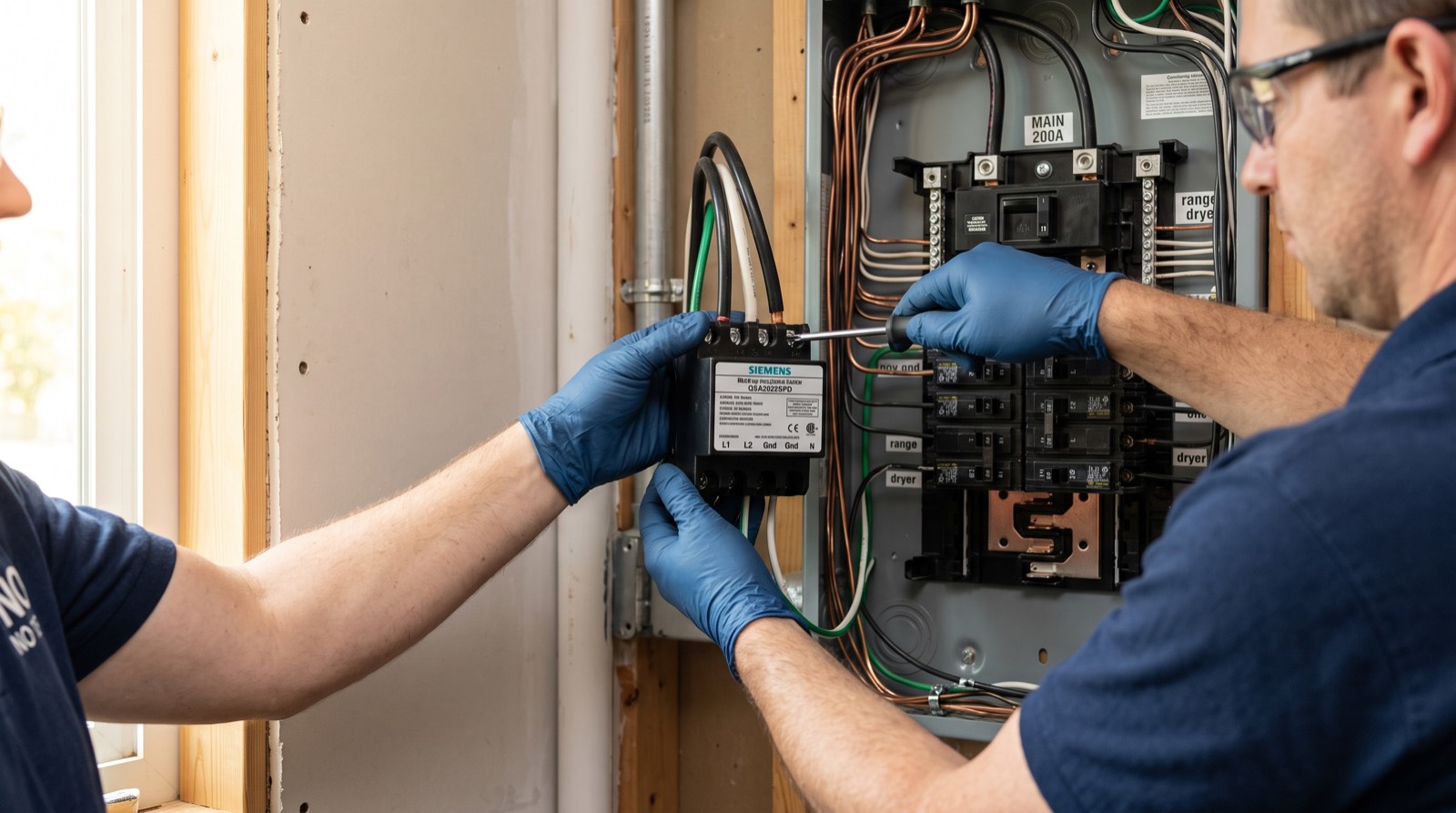
If the GFCI serving your pool equipment trips every few days, the temptation is to keep pressing reset and get on with your afternoon. Resist it. A ground-fault circuit interrupter around water is the single device standing between a small insulation fault and a genuinely dangerous situation, and a device that keeps tripping is almost always reporting something real.
That said, not every trip means danger. Some are caused by moisture and age rather than a fault in your equipment. Knowing the difference saves you money and tells you when to stop resetting and call someone.
What a GFCI is actually watching
A GFCI compares the current flowing out on the hot conductor with the current returning on the neutral. In a healthy circuit those match almost exactly. If even a small amount of current goes missing, the device assumes it found another path back to ground and cuts power in a fraction of a second.
The amount that triggers it is tiny by design, because the goal is to open the circuit well below the level that would injure a person. That sensitivity is exactly why pool and spa equipment is required to be GFCI protected, and also why damp conditions produce trips that a dry indoor circuit never would.
The five things that actually cause pool GFCI trips
1. Moisture in the equipment or the box
This is the most common cause by a wide margin. Water gets into a pump motor, a light fixture, a timer enclosure, or an outdoor receptacle, and provides exactly the alternate path to ground the GFCI is built to detect. It often shows a pattern: trips after irrigation runs, after a rain, after backwashing, or first thing in the morning when everything is covered in dew.
2. A failing pool pump motor
Pump motors live a hard life. Over years the winding insulation degrades, and a motor that reads fine cold can begin leaking current once it heats up and the windings expand. The classic sign is a trip that happens fifteen or twenty minutes into a run cycle rather than at startup.
3. The pool light
An underwater light with a compromised seal, a deteriorating gasket, or a nicked cord will leak current directly into the water. A pool light is the one item on this list where continued resetting is genuinely unwise. If isolating the light stops the tripping, the light needs attention before it goes back into service.
4. Rodent and landscaping damage
Buried and exposed runs around a pool take abuse. Gophers chew insulation, a shovel nicks a conduit during landscaping, a string trimmer catches a cord at the base of a post. The damage can sit unnoticed for months until enough moisture reaches the nick to start leaking.
5. A worn-out GFCI device
GFCIs do not last forever. The internal electronics degrade with age, heat, and the sheer number of trips, and in a coastal environment salt air shortens that life further. A device more than about ten years old that has begun tripping with no other explanation may simply be finished. Newer devices also self-test and will refuse to reset when they fail, which is deliberate: a GFCI that cannot verify itself is supposed to stay off.
How to narrow it down yourself, safely
You can do useful diagnosis without opening anything. Work through it in order and write down what you find, because the pattern is what identifies the culprit.
- Turn off every piece of pool equipment at its own switch or breaker, then reset the GFCI. If it holds, you have proven the wiring is fine and one of the loads is the problem.
- Bring equipment back one item at a time, waiting a full run cycle between each. The one that trips it is your answer.
- Note the timing. Instant trips on startup point toward a short or a damaged conductor; trips after several minutes of running point toward a motor heating up.
- Note the weather. Trips that follow rain, irrigation, or heavy morning dew point to moisture intrusion somewhere.
- Check whether it is only the pool circuit. If other outdoor circuits are also acting up, the problem may be further upstream.
What not to do: never replace a tripping GFCI with a standard receptacle, and never wire around one. It happens more often than it should, usually framed as a temporary fix, and it removes the only protection on a wet-location circuit.
When it stops being a do-it-yourself matter
Call a licensed electrician if any of the following is true. These are not situations where a reset is the answer.
- The GFCI will not reset at all, or trips again immediately with every load disconnected.
- Isolating the pool light stops the trips.
- Anyone has felt a tingle in or near the water. Stop using the pool and get it looked at the same day.
- You find scorching, melted insulation, a burning smell, or a warm faceplate.
- The equipment is fed from an older panel, or you cannot find GFCI protection on the pool circuit at all.
That last point matters on older Central Coast properties. Pools built before current requirements often have equipment, lights, and bonding that predate today's rules. Bringing the whole pool circuit up to standard — protection, bonding of the metal parts around the pool, proper wet-location enclosures — is a defined job with a defined end, not an open-ended repair.
The bonding question most homeowners have never heard of
Grounding and bonding are not the same thing, and around a pool the difference is significant. Bonding ties together all the metal in and around the pool — ladders, rails, the pump housing, reinforcing steel, nearby metal fixtures — so that everything sits at the same electrical potential. If two pieces of metal a swimmer can touch at the same time are at different potentials, current can flow through the person bridging them.
A GFCI does not fix a bonding problem, and a bonding problem does not always trip a GFCI. They are separate layers of protection. If your pool predates current bonding requirements, that is worth an inspection regardless of whether anything is tripping today.
The short version
A pool GFCI that trips is reporting something. Moisture and aging pump motors cause most of it, the pool light is the one to take seriously immediately, and a device that will not reset with everything disconnected means the fault is in the wiring rather than the equipment. Resetting repeatedly without finding the cause is the one approach that never ends well.
If you are in Atascadero, Paso Robles, San Luis Obispo or anywhere on the Central Coast and your pool circuit keeps dropping out, we will trace it properly, tell you exactly what is leaking, and put it right.
Have a question about your own home? Good Neighbors Electric is here to help across Atascadero and the Central Coast. Call (805) 610-5530 or request a free estimate.