Home Electrical Safety
Whole House Surge Protection
Power surges from the grid, lightning, and large appliances quietly damage electronics and shorten their life. A panel-mounted whole-house surge protector defends everything in your home from a single point.
Whole House Surge Protection you can count on
Surge protection is the cheapest insurance in a modern house, and almost nobody has it. The reason is that the thing it protects against is invisible until the day it is not: most surge damage is not one dramatic lightning strike but thousands of small events over years, each one shaving a little life off the electronics in everything you own.
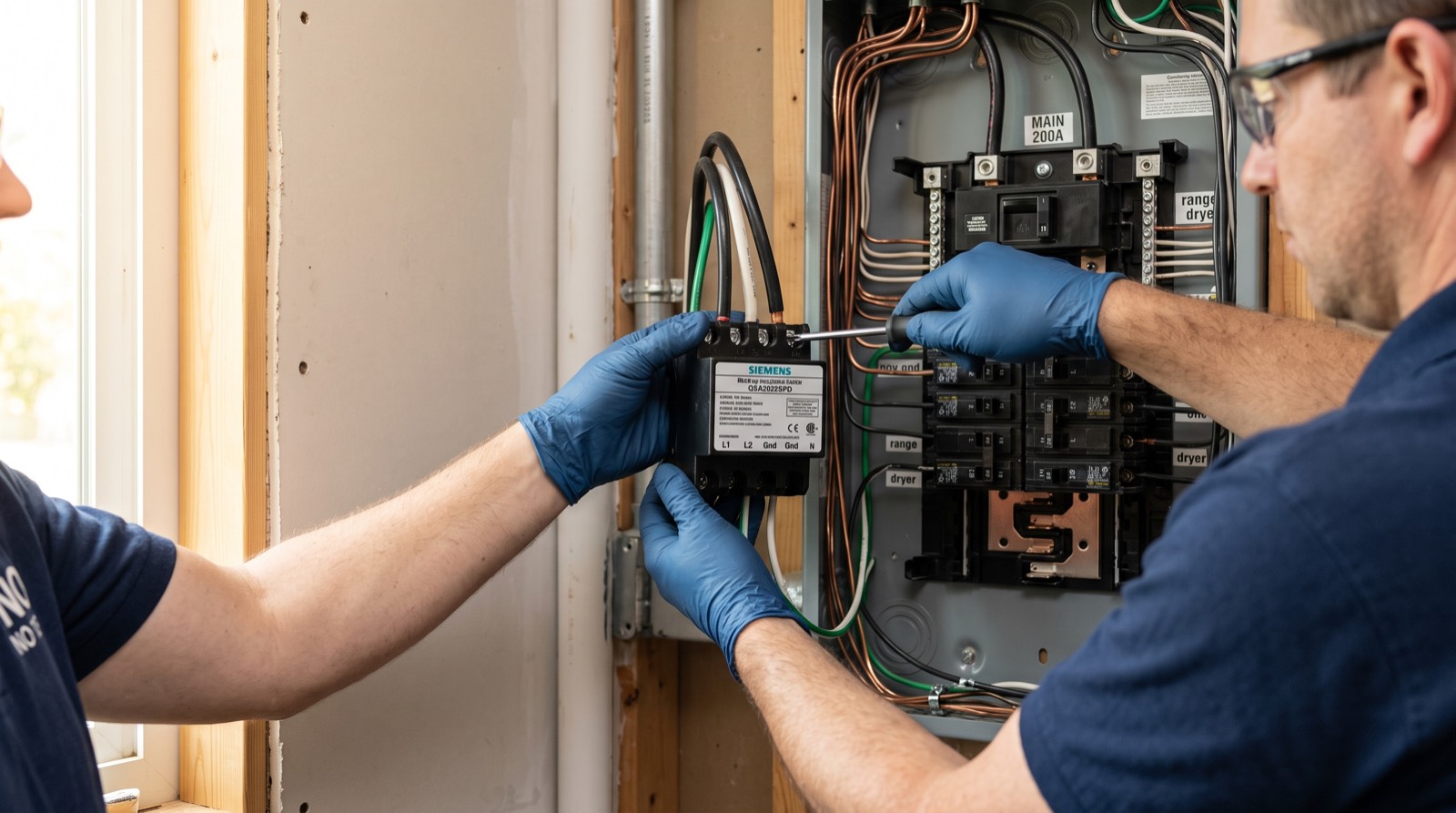
A whole-house surge protective device installs at the panel and clamps voltage before it gets into the branch circuits. It does not replace the power strip behind your desk — the two layers work together, and the panel-level device is the one that takes the big hit.
What has changed is what is in the average house. A 1975 home had a fridge and a television. A 2026 home has a heat pump with a control board, an induction range, an EV charger, a well pump with a soft start, a solar inverter and a router that everything else depends on. The cost of a surge went up enormously while the protection stayed optional.
What we handle
- Panel-mounted whole-home surge protection
- Protection for HVAC, appliances, and electronics
- Layered protection with point-of-use devices
- Fast installation at your existing panel
Signs it is time to call
- You have sensitive equipment on well power
- Pumps and motors starting and stopping put transients onto your own system. Your surges are not all coming from outside.
- Repeated small failures nobody can explain
- Routers, garage door boards, appliance controls and LED drivers failing early is the signature of chronic low-level surge exposure.
- You are adding an EV charger, solar or a heat pump
- All three add expensive electronics and all three are best protected at the moment the panel is already open.
- Your area gets PSPS events or frequent outages
- Restoration after an outage is a common moment for a transient, and it arrives on every circuit at once.
How the job runs
- Check the panel firstA surge device needs a suitable panel with space and correct bonding. If the panel is not right, the device is not the first job.
- Size and selectDevice rated for the service, with an indicator so you can actually tell whether it is still protecting you.
- Install with short leadsThis is where installations go wrong. Long, looped conductors add impedance and let voltage through — the leads want to be as short and straight as the enclosure allows.
- Permit and inspectIt is work at the panel, so it is permitted work.
- Show you the indicatorA surge device is a consumable. It absorbs damage until it cannot, and then it needs replacing. You should know what the light means.
What moves the price
We do not publish a flat number for work we have not looked at — a quote made from a web page is a guess, and guesses get corrected on invoice day. These are the things that genuinely change what your job costs:
- Device rating and whether it is a panel-mounted or meter-mounted type
- Whether the existing panel has space and proper bonding for it
- Whether it is fitted during other panel work — much cheaper than a dedicated visit
- Any grounding electrode correction the panel needs first, which older homes often do
- Permit fees
Fitted alongside a panel upgrade it is a small addition. As a standalone visit it costs more for the same device, which is why we mention it when the panel is already coming out.
What this means on the Central Coast
Two things make this worth more here than the brochure suggests. Private wells: a pump cycling on its own service generates transients inside your house, so some of your surge exposure is self-inflicted and constant. And Public Safety Power Shutoffs: planned outages mean planned restorations, and restoration is exactly when a transient arrives on every circuit simultaneously. If you have already bought a generator to survive PSPS, protecting what it powers is the obvious second half of that decision.
Frequently asked questions
Is whole-house surge protection worth it?
For most homes, yes — a single device protects thousands of dollars of electronics and appliances from surges that power strips alone cannot stop.
Do I still need power strips if I have whole-house protection?
Yes, and they work better together. The panel device takes the large events before they reach your branch circuits; point-of-use protection handles what is left and covers the last few feet. Neither one alone is the complete answer.
Does surge protection wear out?
Yes. It is a consumable that absorbs energy until its capacity is used up, and after a significant event it may be done protecting you while still looking exactly the same. That is why the indicator matters, and why we show you what it means before we leave.
Will it protect against a direct lightning strike?
No, and anyone who says otherwise is overselling. A direct strike is beyond what any surge device is rated for. What it protects against is everything else — nearby strikes, utility switching, restoration transients, and the constant low-level events that quietly shorten the life of your electronics.
Do you serve areas beyond Atascadero?
Yes. We provide whole house surge protection throughout the Central Coast, including Paso Robles, San Luis Obispo, Templeton, Morro Bay, and the Five Cities — all from our base in Atascadero.
Are you licensed and insured?
Yes. Good Neighbors Electric is a CA C-10 Licensed Electrical Contractor, License #1124560, fully insured, and every job is done to code with permits and inspections handled for you.
Need whole house surge protection?
Call (805) 610-5530 or request a free estimate. Honest answers, clean work, and no pressure — the way a good neighbor should treat you.