
What To Check Before Plugging In A New Window AC Unit

Summer heat across the Central Coast pushes many homeowners to grab a window AC unit and plug it in fast. That first cool blast feels great, but the electrical side of the job deserves a careful look before you ever push the plug into the wall. A window AC unit pulls a steady, heavy load, and the outlet behind it may not be ready for that demand. Old wiring, shared circuits, and worn receptacles can turn a simple cooling project into an overheating hazard. Knowing what to check before plugging in a new window AC unit protects your home, your appliance, and the people inside. The right outlet, the right circuit, and a clean connection make all the difference during a long heat wave. This guide walks through every electrical detail you should confirm first, written for real homes in Atascadero, Paso Robles, San Luis Obispo, and the surrounding towns. By the end, you will know exactly when a quick visual check is enough and when it is time to call a licensed electrician.

Electrical Checks To Do Before Plugging In A New Window AC Unit

Most window AC unit problems start with a mismatch between the appliance and the outlet feeding it. A small bedroom unit may draw five to seven amps, while a large living room model can pull twelve amps or more on a single circuit. That number matters because it has to fit inside the rating of the breaker and the wire running through your walls. Many older homes on the Central Coast still run fifteen amp circuits to bedrooms, and those circuits often feed lights, outlets, and electronics at the same time. Adding a thirsty AC unit on top of that existing load is a common cause of tripped breakers and warm receptacles. Before plugging in a new window AC unit, you want to confirm the voltage, the amperage, the circuit, and the physical health of the outlet itself. The next sections break down each of these electrical checks in plain terms so you can move forward with confidence.

Confirm The Voltage And Amperage Before Plugging In A New Window AC Unit

Every window AC unit lists its electrical requirements on a label, usually on the side of the cabinet or printed near the power cord. Small and midsize units almost always run on standard 115 volt household power, which is the same voltage at a normal wall outlet. Larger units, often rated above twelve thousand BTU, may require 230 volt power and a special outlet that a regular wall receptacle cannot provide. Reading this label first saves you from forcing a high voltage appliance onto a circuit that was never built for it. The label also lists the running amperage, and that figure tells you how much continuous current the unit needs while it cools. Matching that amperage against your breaker rating is the single most important step in the whole process. When the numbers do not line up, the safe move is to stop and have the circuit evaluated rather than gamble on a connection that runs hot.

Voltage and amperage work together, and ignoring either one can damage both your home and the new appliance. A 230 volt unit plugged into a converted or improvised outlet can fail almost instantly, and the repair bill often costs more than the AC unit. On the other side, a standard 115 volt unit that draws near the top of a fifteen amp circuit will struggle every time the compressor kicks on. That repeated strain heats the wiring, loosens connections over time, and shortens the life of the receptacle. Homeowners in older Cambria and Morro Bay houses see this often, since coastal homes were not always wired for modern cooling loads. Taking two minutes to read the label and compare it to your panel saves hours of frustration later. If the amperage on the label sits close to or above your circuit rating, that circuit needs an upgrade before the unit goes in.

Some window AC units carry a third clue on the label in the form of the cord plug shape. A 115 volt unit uses a familiar three prong plug, while a 230 volt unit uses a plug with a different blade pattern that will not fit a standard outlet. That shape difference exists on purpose, since it prevents people from connecting a high voltage appliance to low voltage wiring by accident. If your new unit shipped with an unusual plug, that is a clear sign you need a dedicated 230 volt outlet installed by a professional. Trying to file down a plug or use an adapter to force the fit is dangerous and against electrical code. Need a proper outlet or circuit for your cooling equipment? Click here for our air conditioning wiring service. A licensed electrician can set up the exact voltage and amperage your unit demands and leave you with a safe, code compliant connection.

Inspect The Outlet And Circuit Before Plugging In A New Window AC Unit

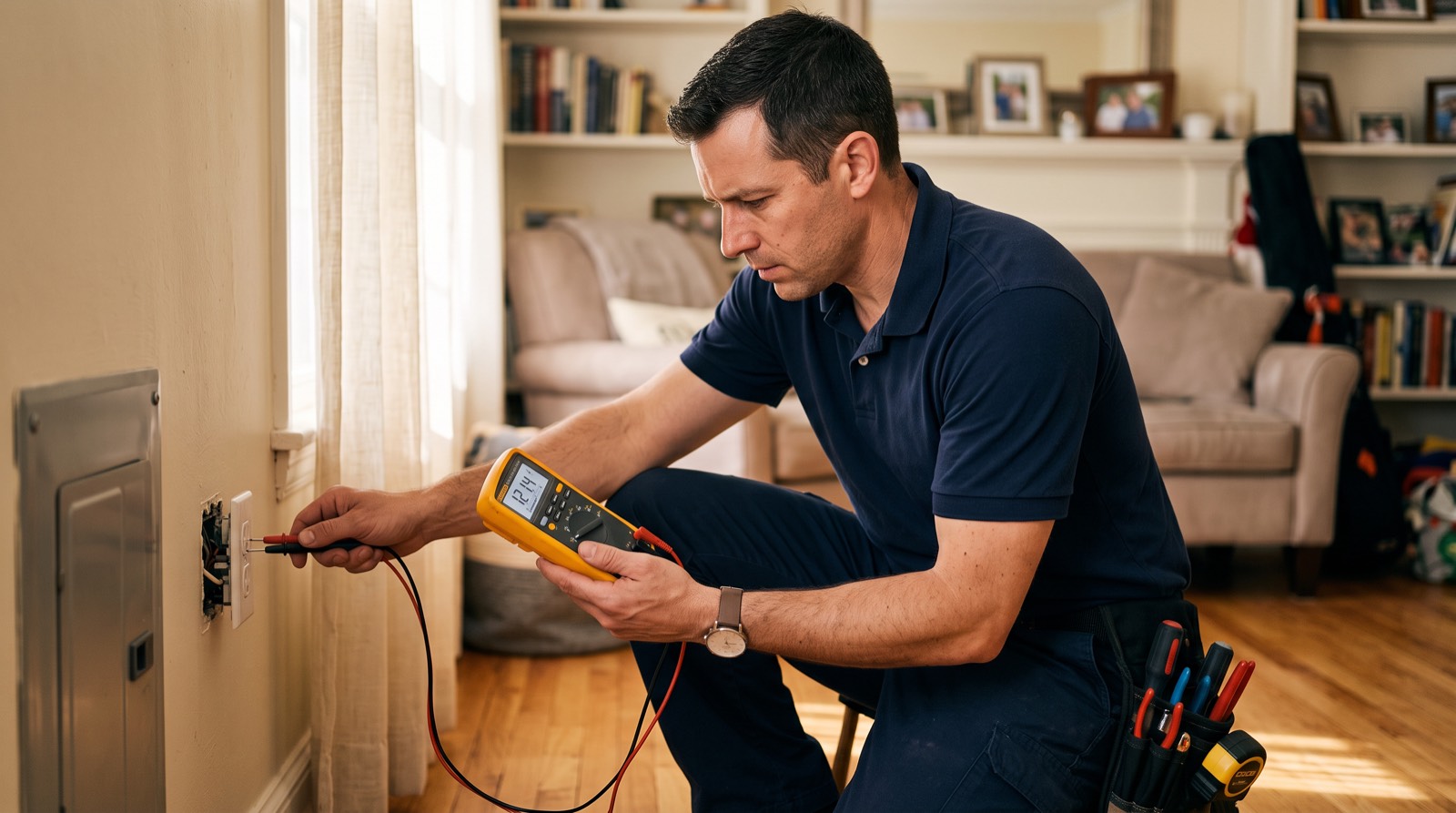
The outlet itself tells a story long before you plug anything into it, so give it a real inspection. Look for cracks in the faceplate, loose mounting, or a receptacle that feels wobbly when you touch a plug to it. Discoloration around the slots, a faint burnt smell, or brown scorch marks all point to past overheating that will only get worse under an AC load. A receptacle that no longer grips a plug firmly cannot carry heavy current safely, since loose contact points generate heat through resistance. Test the outlet with a small lamp or a plug in tester to confirm it has power and correct wiring. If anything looks worn, melted, or damaged, do not connect your window AC unit until the outlet is replaced. These small warning signs are easy to overlook in a hot rush, yet they are exactly the clues that prevent a fire.

Beyond the outlet, you need to understand the circuit that feeds it, since the breaker is the real gatekeeper for your AC unit. Open your electrical panel and find the breaker that controls the room where the unit will sit, usually labeled fifteen or twenty amps. A twenty amp circuit with dedicated wiring gives a window AC unit far more breathing room than a crowded fifteen amp bedroom circuit. Map out what else shares that circuit, since televisions, lamps, phone chargers, and the AC unit all draw from the same wire. When too many devices run at once, the breaker trips, and a breaker that trips repeatedly is warning you of a real overload, not just an annoyance. The best setup for a large window AC unit is a dedicated circuit that powers nothing else. Want to know if your breaker can handle the load? Click here for our circuit breaker installation service.

Extension cords and power strips deserve a firm warning, because they cause many of the AC unit failures we see each summer. A window AC unit should always plug directly into a wall outlet, never into a cord or strip rated below the unit demand. Most household extension cords are too thin to carry the continuous current an AC compressor pulls, and that thin wire heats up under the strain. Power strips add another weak link, and many lack the amperage rating to handle a cooling appliance at all. If the outlet sits too far from the window, the answer is a new outlet in the right spot, not a long cord stretched across the room. Coastal humidity and salt air in Cayucos and Avila Beach can corrode cheap cords even faster, making them riskier over time. A properly placed dedicated outlet removes the temptation entirely and keeps your connection clean, short, and safe.


Common Electrical Problems After Plugging In A New Window AC Unit

Even when the unit fits the outlet on paper, real homes throw surprises that show up once the compressor starts cycling. A breaker that holds for an hour and then trips, lights that dim each time the unit kicks on, or an outlet that warms up over an afternoon all signal an electrical issue. These symptoms are your home telling you the circuit is working harder than it should. Catching them early prevents damage to both the wiring and the new appliance, and it keeps a small problem from becoming an expensive repair. Many homeowners assume the AC unit is faulty when the real trouble lives inside the wall. Understanding these common problems helps you tell the difference between a normal startup and a genuine warning sign. The sections below cover what to watch for and when a professional should step in.

Tripped Breakers After Plugging In A New Window AC Unit

A breaker that trips when your window AC unit starts is one of the most common calls we get during a Central Coast heat wave. The compressor in an AC unit draws a surge of current at startup, often several times its running amperage, and that brief spike can push a loaded circuit past its limit. If the breaker trips once and resets cleanly, the circuit may simply be carrying too many other devices at that moment. When it trips again and again, though, the message is clear that the circuit cannot support the unit safely. Resetting a breaker over and over is never a real fix, since the breaker is doing its job by cutting power before the wire overheats. The correct response is to lighten the circuit, move the unit to a dedicated circuit, or upgrade the wiring. Ignoring repeated trips invites overheated wiring and a serious fire risk inside the wall.

Sometimes a tripping breaker points to a circuit that was overloaded long before the AC unit arrived. Older homes in Templeton and Santa Margarita often have circuits stretched across several rooms, feeding outlets the original builder never expected to run a cooling appliance. Adding a window AC unit to that kind of circuit is the final straw that finally trips the breaker. In these cases the unit is not the problem, and swapping it for a different model will not help. The wiring layout needs to change so the AC unit has the dedicated power it requires. A licensed electrician can trace the circuit, measure the real load, and recommend the right path forward. Struggling with breakers that keep tripping? Click here for our electrical repair service.

A breaker that feels hot to the touch or that buzzes when the AC unit runs is a more urgent warning than a simple trip. Heat at the breaker means current is meeting resistance, and resistance in a panel almost always traces back to a loose connection or a failing breaker. That heat can spread to the bus bar and surrounding breakers, turning one weak point into a panel wide hazard. A buzzing or crackling sound signals arcing, which is electricity jumping a gap and producing intense, localized heat. Neither symptom should ever be left alone, and the AC unit should stay unplugged until the panel is inspected. Homeowners cannot safely diagnose these issues from outside the panel, so this is firmly professional territory. Quick action here prevents both appliance damage and the kind of wiring failure that leads to a house fire.

GFCI And Outlet Issues After Plugging In A New Window AC Unit

Modern window AC units often ship with a special plug that includes a built in safety device, and that plug can confuse homeowners who expect a plain cord. Many newer units carry an LCDI plug, which stands for leakage current detection and interruption, designed to cut power if the cord develops a fault. That plug has a small reset button and test button right on the head, and it may trip during the first few uses while it settles in. A trip from this device is not a flaw, since it is protecting you from a possible cord failure. Pressing reset usually restores power, but a plug that trips constantly points to a real problem with the cord or the unit. Never bypass or remove this safety plug, since it exists to prevent electrical fires from a damaged cord. If the LCDI plug will not hold a reset, the unit needs service or replacement rather than a workaround.

Outlets near windows sometimes fall under GFCI protection, especially in homes built or updated to recent code, and that adds another layer to consider. A GFCI outlet watches for tiny imbalances in current and shuts off fast to prevent shock, which is exactly what you want near moisture from a window. The challenge is that some older AC units can cause nuisance trips on a sensitive GFCI, leaving you puzzled when the unit suddenly dies. The right answer is never to remove the GFCI protection, since that protection guards against very real shock hazards in damp areas. Instead, a professional can confirm the outlet is wired correctly and rule out a true ground fault. Living in a coastal town like Pismo Beach or Grover Beach makes this protection even more valuable, given the humidity and salt in the air. Need reliable shock protection where moisture is a concern? Click here for our GFCI outlet installation service.

A warm outlet, a flickering connection, or a plug that falls out easily all signal trouble that the AC unit will only worsen. Heat at the receptacle usually means the internal contacts have loosened or the wiring behind it has worked free over years of use. Loose connections create resistance, resistance creates heat, and heat slowly melts the insulation that keeps your wiring safe. An AC unit drawing heavy current through a loose outlet accelerates that damage every single hour it runs. If you notice any of these signs, unplug the unit right away and leave the outlet alone until it is repaired. Replacing a tired outlet is a small, affordable job compared to the damage a slow burn inside the wall can cause. A clean, tight, properly rated outlet keeps your cooling running smoothly through the hottest weeks of the year.


Why You Need A Professional Electrician For Window AC Unit Wiring

Plugging in a window AC unit feels like a simple task, yet the electrical side carries real risk when the home is not ready for the load. A licensed electrician brings the training to read your panel, measure circuit capacity, and spot hazards that stay hidden behind the wall. Good Neighbors Electric serves homeowners across Atascadero, Paso Robles, San Luis Obispo, and the wider Central Coast with honest, careful work. We help you set up safe outlets, dedicated circuits, and proper protection so your cooling runs worry free all summer. The peace of mind that comes from a code compliant connection is worth far more than the gamble of a shortcut. Below are the reasons a professional makes the smart difference for your window AC unit.

A Safe Window AC Unit Connection Protects Your Home

A correctly wired AC unit connection removes the guesswork that leads to overheated outlets and tripped breakers. When a professional installs a dedicated circuit, the unit gets the steady power it needs without stealing capacity from the rest of the room. That stability protects your appliance, since clean power and proper voltage extend the life of the compressor. It also protects your wiring, because a circuit sized for the real load never runs hot enough to cause damage. Homeowners gain the freedom to run the AC unit all day without watching the panel or worrying about a melted plug. A safe connection is the foundation of comfortable, reliable cooling through a long Central Coast summer.

The hidden parts of your electrical system are exactly where small problems grow into big ones unseen. A professional inspection catches loose connections, undersized wire, and aging breakers before they fail under an AC load. Coastal homes face extra wear from salt air and humidity, which corrode connections and shorten the life of outlets over time. Catching that wear early means a quick repair instead of an emergency call during the hottest week of the year. Our team checks the full path from the panel to the plug, so nothing weak gets overlooked. That thorough approach is the difference between a connection that simply works and one that stays safe for years.

A professional also makes sure your setup meets current electrical code, which protects you legally and during any future home sale. Code requirements exist because they reflect decades of lessons about what keeps wiring safe under real loads. An outlet or circuit that meets code today gives you confidence that your cooling project was done the right way. It also avoids the headache of failed inspections or insurance disputes after a problem. Want a full safety review before summer hits hard? Click here for our electrical inspection service. A small investment in proper wiring pays back every season your AC unit runs without trouble.

Upgrading Your Circuit For A Window AC Unit Is A Smart Investment

Adding a dedicated circuit for your window AC unit may sound like a big step, yet it solves the root cause of most cooling headaches. A dedicated circuit means the AC unit no longer competes with lamps, chargers, and electronics for the same limited power. That single change ends the cycle of tripped breakers and gives the compressor the smooth, steady current it needs. Homeowners often find their whole room feels more stable once the cooling load has its own path back to the panel. The cost of a new circuit is modest compared to repeated repairs or a damaged appliance. It is the kind of upgrade that pays for itself across many hot summers.

Upgrading also opens the door to better, larger cooling equipment down the road. A circuit sized only for a small unit limits your options if you later want stronger cooling for a bigger room. Planning ahead with the right wiring means your home is ready for whatever cooling you choose next. This kind of forward thinking saves money, since adding capacity once costs less than redoing the work twice. Our electricians help you match the circuit to both your current unit and your future plans. That balanced approach keeps your home flexible and your wiring safe.

For homes that run several cooling units or face frequent summer storms, a wider electrical upgrade may make even more sense. Older panels sometimes lack the capacity to support modern cooling alongside everything else a household runs. A panel or service upgrade gives your whole home more headroom and ends the constant juggling of loads. That upgrade also strengthens your protection against surges that travel in during summer storms along the coast. We assess your real needs and recommend only what your home truly requires, never more. The result is a cooler, safer house that handles peak summer demand with ease.

Why Choose Good Neighbors Electric For Your Window AC Unit Wiring

Good Neighbors Electric earned the Best of the Central Coast award for electrical services because we treat every home with care and respect. Our team is fully licensed and insured, so you know skilled professionals are handling your wiring from start to finish. We keep our job sites clean and organized, and we protect your property as if it were our own. Every new installation comes backed by our two year workmanship warranty, giving you lasting confidence in the work. We waive the dispatch fee when you move forward with the job, since we believe in fair, honest pricing. That combination of skill and integrity is why neighbors across the region trust us with their homes.

We bring a five star commitment to every visit, no matter how large or small the project. Cooling your home should feel simple, and our job is to make the electrical side just as easy. When you call us about a window AC unit, we listen first and then explain your options in plain language. You will never face pressure or confusing upsells, only clear advice rooted in what your home needs. Our electricians take the time to do the job right, because shortcuts have no place in safe wiring. That respect for your time and your trust shapes everything we do.

From the first phone call to the final walkthrough, we aim to be the kind of company you recommend to your own neighbors. We serve Atascadero, Paso Robles, San Luis Obispo, Templeton, Morro Bay, and the many towns in between with the same dependable care. Reach us at (805) 610-5530 or email anthony.orozco@goodneighborselectric.com to set up your window AC unit wiring. Whatever your cooling project, we make sure the power behind it is safe, steady, and built to last. Choosing Good Neighbors Electric means choosing peace of mind for the long, hot summer ahead. Let us handle the wiring so you can simply enjoy the cool air.