Why Your AC Keeps Tripping The Breaker In Summer Heat

Summer in Atascadero brings long stretches of triple-digit afternoons, and your air conditioner works overtime to keep your home comfortable. When the breaker keeps tripping every time the AC kicks on, it is more than an inconvenience; it is your electrical panel sending a clear warning signal. A tripping breaker means the circuit is drawing more current than it can safely handle, and ignoring it can lead to damaged wiring, a burned-out compressor, or even an electrical fire. Many homeowners assume the issue lies entirely with the air conditioner, but the root cause often involves the breaker, the circuit wiring, or the panel itself. Understanding the connection between your AC unit and your home’s electrical system is the first step toward a safe, lasting fix. Good Neighbors Electric serves homeowners across the Central Coast with expert diagnostics, panel upgrades, and dedicated air conditioning wiring solutions. This guide walks you through the most common reasons your AC keeps tripping the breaker, what each cause means for your home, and when to call a licensed electrician.

Common Electrical Reasons Your AC Keeps Tripping The Breaker

An air conditioner is one of the largest electrical loads in any home, often pulling between 15 and 60 amps depending on the unit size. When that load exceeds what the circuit was designed for, the breaker trips to protect the wiring from overheating. The reasons behind these trips usually fall into a few specific electrical categories, each with its own warning signs and repair path. A short circuit, a ground fault, a worn breaker, or an overloaded circuit can all cause repeated trips during peak summer heat. Identifying which issue you are dealing with requires hands-on testing, panel inspection, and sometimes a load calculation. The longer the problem goes unaddressed, the higher the risk of damage to the AC compressor and the home’s wiring. A qualified electrician can pinpoint the exact failure point and recommend the correct repair before the next heat wave hits.

A Short Circuit Causing Your AC To Trip The Breaker

A short circuit happens when a hot wire touches a neutral wire or a grounded surface, creating a sudden surge of current that the breaker shuts down almost instantly. In an AC system, short circuits often develop inside the condenser unit, the disconnect box, or along the run of wiring between the panel and the outdoor unit. Rodents chewing on insulation, moisture intrusion in outdoor disconnects, and aging wire insulation are common culprits along the Central Coast. You may notice a burning smell near the panel or the outdoor unit, scorch marks around the breaker, or the breaker tripping the instant the AC tries to start. A short circuit is one of the most serious electrical faults because of the heat and arc energy it produces. Repairing it requires tracing the entire circuit, replacing damaged wiring, and confirming the breaker still functions within spec.

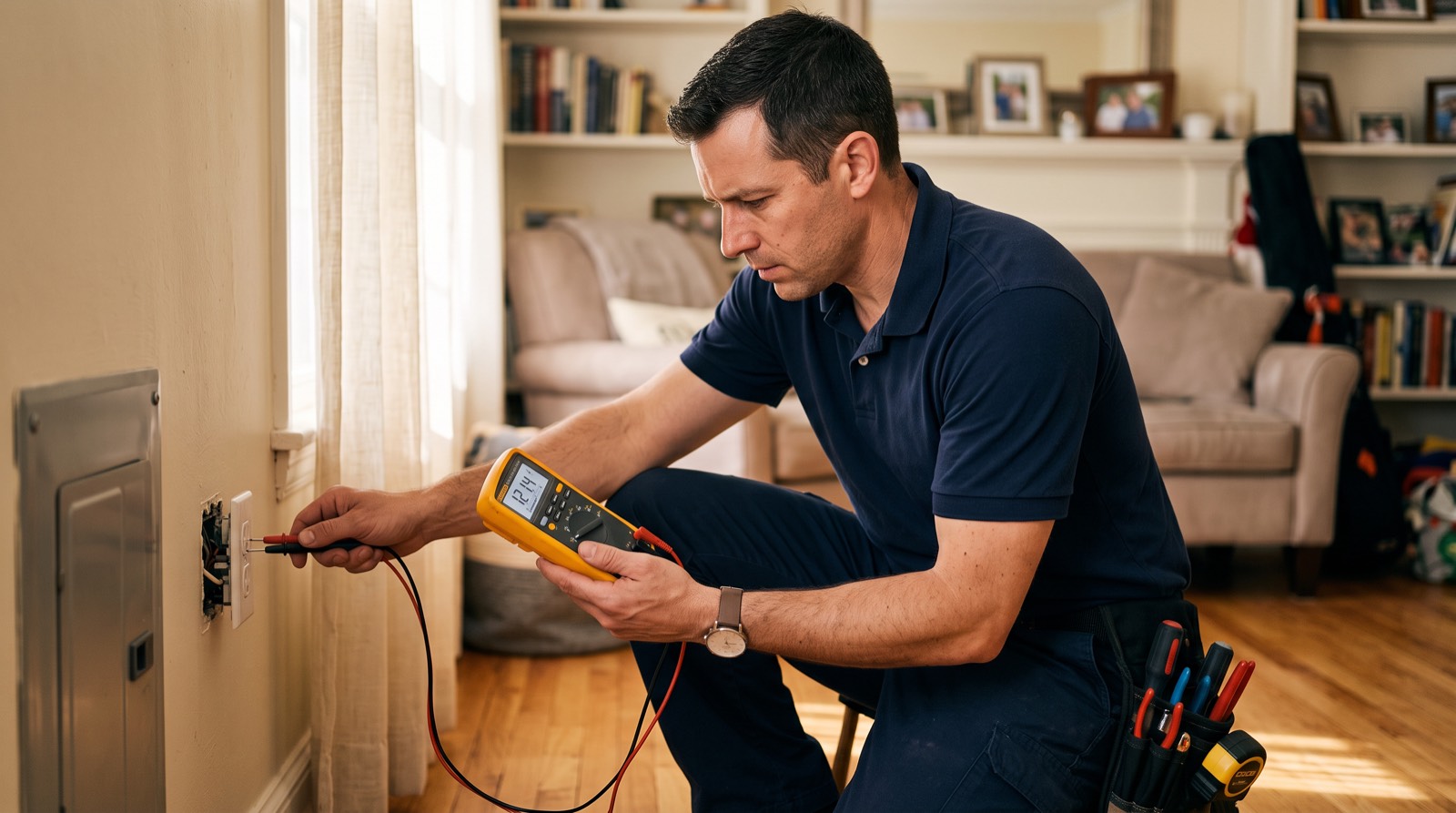
Diagnosing a short in an AC circuit calls for a multimeter, an insulation resistance tester, and a careful visual inspection of every junction along the line. The electrician will isolate sections of the circuit to narrow down the fault location, then replace the affected wiring with properly rated conductors. In some cases, the compressor windings inside the AC unit have shorted internally, which means the HVAC technician needs to handle the repair on the equipment side. The electrical contractor will still need to verify the circuit before reconnecting power. Skipping this verification step can lead to repeat trips, damaged replacement parts, and wasted service calls. A thorough short-circuit repair restores both safety and reliable AC operation.

Preventing future short circuits comes down to proper installation, weatherproof connections, and regular inspections of outdoor electrical components. Sealed disconnects, UV-rated wire jackets, and pest-resistant conduit all extend the life of your AC wiring. If your home still has aluminum branch wiring or original cloth-insulated cable, an upgrade to modern copper conductors removes a major fire risk. Need fast help with a damaged circuit? Click here for our electrical repair service. Good Neighbors Electric repairs short circuits across Atascadero, Paso Robles, and San Luis Obispo with same-day response when conditions allow. We finish every job with continuity testing and a clean, organized work area.

A Ground Fault Causing Your AC To Trip The Breaker

A ground fault occurs when a live conductor makes contact with a grounded metal surface, such as the AC condenser cabinet, conduit, or equipment chassis. Like a short circuit, a ground fault produces a rapid current spike that trips the breaker, but the fault path runs through the grounding system instead of the neutral. Outdoor AC units sit exposed to rain, sprinklers, dust, and salt air, all of which break down insulation over time and create paths for ground faults. You might see your breaker trip after a foggy morning, right after irrigation runs, or following a thunderstorm. Inside the panel, a ground fault often shows up as a tripped breaker with no visible damage, which makes it harder to diagnose without proper test equipment. The electrical grounding system itself must also be checked to confirm it is bonded correctly and carrying fault current safely.

A licensed electrician will test the AC circuit with an insulation resistance meter to measure how well the wire insulation holds back voltage from ground. Low readings point to a compromised wire run, a failing contactor, or moisture inside the condenser disconnect. The repair may involve replacing a section of wire, installing a new weatherproof disconnect, or correcting a loose grounding conductor at the panel. Proper bonding between the AC unit, the conduit, and the grounding electrode system is essential for the breaker to trip when it should. A weak ground connection can let fault current linger long enough to damage the compressor or shock anyone touching the cabinet. Good electrical grounding is the foundation of every safe AC installation.

Whole-home grounding upgrades often pair well with ground-fault repairs, especially in older Central Coast homes built before modern bonding requirements. Driven ground rods, updated grounding electrode conductors, and intersystem bonding terminals all improve fault clearing across every circuit, not just the AC. If your home has a mix of two-prong outlets, ungrounded subpanels, or unbonded water and gas piping, a full grounding review is worth scheduling before summer peaks. Click here for our electrical grounding service to learn more. Good Neighbors Electric handles grounding upgrades in compliance with the latest National Electrical Code. We document every connection so future inspections and service calls go smoothly.

An Overloaded Circuit Causing Your AC To Trip The Breaker

An overloaded circuit trips the breaker when the total current draw exceeds the breaker’s rated amperage for too long. Window AC units share circuits with outlets, lighting, and appliances; when the compressor cycles on, the combined load pushes the breaker past its limit. Central AC systems should always run on a dedicated circuit, but older homes sometimes have outlets, fans, or pool equipment tied into the same line through years of unpermitted work. Hot weather makes the situation worse because the compressor pulls more amps when the outdoor temperature climbs above 95 degrees. You may notice the breaker holds in the morning but trips every afternoon once the sun hits the condenser. That pattern almost always points to an overload rather than a hard fault.

Solving an overloaded AC circuit starts with a load calculation that compares the unit’s nameplate amperage to the breaker, wire size, and other devices on the line. If a window unit shares a 15-amp circuit with a refrigerator, the long-term fix is a dedicated 20-amp circuit run from the panel. For central systems, the electrician verifies the disconnect, breaker, and wire gauge match the manufacturer’s minimum circuit ampacity and maximum overcurrent protection ratings. Undersized wire is a common find in homes where AC units were upgraded without updating the wiring behind the wall. Replacing the wire and breaker to match the new equipment restores safe operation and stops the nuisance trips. Proper sizing also extends the life of the compressor by preventing voltage drop during startup.

When the entire panel runs near capacity, individual circuit fixes only solve part of the problem. A whole-house load review may show that an electrical service upgrade or a new subpanel is needed to support modern AC equipment, EV chargers, and other heavy loads. Good Neighbors Electric performs detailed load calculations and clearly explains your options before recommending any major work. We service Atascadero, Templeton, Paso Robles, San Luis Obispo, and the surrounding Central Coast communities. Our team holds the licensing, insurance, and code knowledge required to handle AC circuit upgrades safely. Every installation comes with our 2-year workmanship warranty on new work.


How Your AC, Breaker, And Electrical Panel Work Together In Summer

Your air conditioner, the dedicated breaker, the panel, and the wiring all function as a single system designed to deliver large amounts of current safely on demand. When any component falls out of spec, the breaker is usually the first part to react, because its entire purpose is to interrupt the circuit before damage spreads. Summer heat stresses every piece of that system at once: ambient temperatures raise wire resistance, panels sitting in direct sun run hotter inside, and breakers nearing the end of their service life become more sensitive. Understanding how these parts work together helps explain why a breaker that held last summer might start tripping this year. It also explains why simply swapping the breaker rarely solves the underlying issue. A thorough diagnosis looks at the AC unit, the circuit, the breaker, and the panel as one connected system.

Your Breaker Protects The AC Circuit From Damage

A circuit breaker is a thermal-magnetic safety device that trips when current exceeds its rating for a set period of time. The thermal element handles slow overloads, like an AC pulling slightly too many amps over several minutes, while the magnetic element handles instant faults, like short circuits and ground faults. Breakers serving AC equipment are usually double-pole 240-volt breakers rated between 20 and 60 amps, sized to match the unit’s maximum overcurrent protection rating. When a breaker trips repeatedly, it can wear out internally, losing the ability to hold its rated current even under normal conditions. A worn breaker may trip at 20 amps when it was designed to hold 30, which feels random to a homeowner but follows a predictable failure pattern. Replacing a worn breaker with a properly rated, manufacturer-matched unit restores reliable protection.

Not every breaker problem means the breaker itself has failed; sometimes the breaker is doing exactly what it was designed to do. A breaker that trips repeatedly is telling you something downstream is wrong, and silencing it by upsizing the breaker is dangerous and illegal under code. Oversized breakers allow wire to overheat without tripping, which is one of the leading causes of electrical fires in older homes. A licensed electrician will test the breaker under load, compare its behavior to manufacturer specs, and only replace it when testing confirms a fault. The replacement breaker must match the panel brand and listing to maintain the panel’s UL rating. Mixed-brand breakers in a panel create insurance and safety problems that show up during inspections and home sales.

Circuit breaker installation and repair are core services for any reputable Central Coast electrician. Click here for our circuit breaker repair service if your AC breaker feels hot, looks discolored, or trips without reason. Good Neighbors Electric stocks common breaker brands and sizes, so most repairs finish in a single visit. We test every replacement breaker under load before closing the panel. Our team also documents the work for your records, which helps with home sales, insurance claims, and future service calls. Clean, organized panels make every future electrical project easier.

Your Electrical Panel Carries The Load For Every AC Cycle

The main electrical panel distributes incoming utility power to every circuit in your home, including the dedicated AC circuit. Panels are rated by total amperage, usually 100, 125, 150, or 200 amps for residential service, and that rating sets the ceiling on how much electricity can flow through the home at one time. A central AC unit can pull a quarter of a 100-amp panel’s capacity by itself during startup, leaving limited headroom for cooking, laundry, EV charging, and pool equipment. When the panel is full or near capacity, voltage sags during AC startup can cause breakers to trip and equipment to fail prematurely. Older panels also suffer from worn bus bars, loose connections, and outdated breaker designs that no longer meet current safety standards. Some panel brands have been recalled or flagged as fire hazards and should be replaced even when they appear to work.

Panel age, brand, and condition all factor into how well your AC circuit performs during summer. Federal Pacific, Zinsco, and certain Challenger panels are known for failing to trip during faults, which puts AC wiring and the rest of the home at serious risk. Modern panels feature improved bus designs, better breaker contact, and support for advanced protection devices like AFCI and surge protection. Upgrading from a 100-amp to a 200-amp service often pays for itself by supporting EV chargers, heat pumps, and high-efficiency AC equipment without further panel work. The upgrade also resolves chronic tripping issues caused by an undersized service. Coordinating with PG&E for a service upgrade is part of the electrician’s scope on this kind of project.

If your panel feels warm to the touch, shows rust, hums under load, or contains a known problem brand, an inspection should happen before the next summer cycle. Click here for our electrical panel installation service to schedule a quote. Good Neighbors Electric installs panels from trusted manufacturers and handles every step of the permitting and inspection process. We coordinate the utility disconnect, complete the upgrade, and restore power the same day in most cases. Our installations include whole-house surge protection options to safeguard your AC, refrigerator, and electronics. A clean panel install sets the stage for decades of reliable service.

Your AC Wiring Must Handle Summer Startup Surges

The wire feeding your AC unit must be sized to handle both the continuous running current and the much higher inrush current that occurs when the compressor starts. Inrush current can spike to five or six times the running amperage for a fraction of a second, and undersized wire heats up rapidly during that surge. Over time, repeated startups on undersized wire degrade the insulation, raise resistance, and create the conditions for ground faults and short circuits. Conductor gauge, conduit fill, distance from the panel, and ambient temperature all influence the correct wire size for an AC installation. A properly sized circuit uses copper conductors rated for the unit’s nameplate amperage with an appropriate safety margin built in. The disconnect at the unit must match the wire and breaker ratings to keep the system code-compliant.

Older homes sometimes have AC wiring run through hot attics, along south-facing exterior walls, or across uninsulated crawlspaces where summer temperatures push conductor ratings to their limits. Heat derates the ampacity of every wire, meaning a 30-amp circuit in a 120-degree attic may only safely carry 24 amps during a summer afternoon. That hidden derating shows up as breaker trips that only happen during the hottest hours of the day. Correcting the issue may involve rerouting wire, upsizing the conductor, or adding ventilation to the wiring pathway. The fix depends on the home’s construction and the AC unit’s load profile. A field survey by a qualified electrician identifies which corrections deliver the most value.

Quality AC wiring also includes weatherproof outdoor connections, secured conduit runs, and a properly bonded disconnect within sight of the unit. Click here for our air conditioning wiring service to upgrade or repair your AC circuit. Good Neighbors Electric installs AC wiring in compliance with the California Electrical Code and manufacturer specifications. We label every wire, torque every termination to spec, and verify operation under full load before leaving. Our crews keep job sites clean and respect your property throughout the work. Reliable AC wiring is the foundation of a cool, safe summer.


Why You Need A Licensed Electrician When Your AC Keeps Tripping The Breaker

A tripping breaker is not a problem to live with through another heat wave; it is an active signal that your electrical system needs attention. The diagnostic process involves live testing, panel work, and code interpretation that go well beyond a homeowner repair. A licensed electrician brings the tools, training, and insurance required to handle high-current circuits safely. Good Neighbors Electric has built its reputation across the Central Coast by showing up on time, explaining the issue clearly, and finishing the work to a high standard. Every job comes with our 2-year workmanship warranty on new installations and a waived dispatch fee when you move forward with the recommended repair. When your AC keeps tripping the breaker, the right call is the one that gets the system back to safe, reliable operation.

A Licensed Electrician Stops Your AC From Tripping The Breaker Safely

A licensed electrician follows a structured diagnostic process that begins with the panel, moves through the circuit, and ends at the AC unit itself. That sequence rules out wiring, breaker, and panel issues before pointing the homeowner toward HVAC service. Live testing under load reveals problems that visual inspection alone misses, such as voltage drop, loose terminations, and intermittent faults. Working inside a hot panel during summer demands proper PPE, arc-rated tools, and lockout procedures that homeowners are not trained to use. Mistakes at the panel can cause arc flash injuries, equipment damage, and serious code violations. Hiring a licensed pro removes those risks entirely.

The repair itself often involves more than swapping a single part. Replacing a breaker, upsizing a conductor, tightening a lug, or correcting a grounding bond may all happen in a single visit to fully solve the issue. A licensed electrician documents the work, pulls permits when required, and arranges inspections so the repair stands up to future scrutiny. That paperwork protects the homeowner during insurance claims and real estate transactions. It also creates a clear record for the next service visit. Good documentation is part of what separates a professional repair from a temporary patch.

Beyond the immediate fix, a licensed electrician can recommend preventive upgrades that keep AC circuits stable for years to come. Whole-house surge protection, dedicated AC circuits, panel cleaning, and grounding improvements all reduce the chance of future trips. These upgrades work together to extend the life of the AC compressor and protect every electronic device in the home. Good Neighbors Electric explains each option with clear pricing and lets the homeowner choose the right scope of work. We never pressure homeowners into work they do not need. The goal is a safe, reliable electrical system that supports the way you live.

A Licensed Electrician Diagnoses Why Your AC Keeps Tripping The Breaker

Accurate diagnosis is the difference between a one-visit repair and an endless cycle of returning to the panel each weekend. A licensed electrician uses clamp meters, multimeters, insulation testers, and thermal imaging to gather hard data about the circuit’s behavior. Thermal imaging in particular shows hot spots at breakers, lugs, and splices that point directly to failing connections. Those tools cost thousands of dollars and require training to interpret correctly. Homeowners working with a basic multimeter cannot replicate that level of insight. The result is a diagnosis built on measurements, not guesses.

The diagnostic process also accounts for environmental factors that homeowners may overlook. Outdoor temperature, irrigation schedules, attic ventilation, and even the time of day all influence when and why a breaker trips. A licensed electrician asks the right questions, reviews the symptoms, and matches them against known failure patterns. That experience speeds up the diagnosis and reduces the number of trips needed to confirm the fix. It also catches related issues, such as a worn contactor or a failing capacitor, that may need HVAC attention. A coordinated approach saves the homeowner time and money.

Once the root cause is confirmed, the electrician explains the findings in plain language and outlines the repair options. The homeowner sees exactly what failed, why it failed, and what the repair involves before any work begins. That transparency builds trust and helps the homeowner make informed decisions. Good Neighbors Electric takes pride in clear communication from the first phone call through the final invoice. Our customers know what they are paying for and what they are getting. That clarity is part of why we have earned recognition as Best Of The Central Coast for Electrical Services.

Why Choose Good Neighbors Electric When Your AC Keeps Tripping The Breaker

Good Neighbors Electric is a fully licensed and insured electrical contractor serving Atascadero, Paso Robles, Templeton, San Luis Obispo, Morro Bay, and the surrounding Central Coast communities. Our team specializes in residential service work, including AC circuit repairs, panel upgrades, dedicated circuits, and whole-house surge protection. We have earned recognition as a Best Of The Central Coast winner for electrical services, and our customers continue to choose us because we deliver on our promises. Every job starts with a clear quote and ends with a clean, organized work area. We respect your property and your time. That is the standard we hold ourselves to on every call.

Our team waives the dispatch fee when you move forward with the recommended work, which keeps the diagnostic process accessible and fair. New installations carry a 2-year workmanship warranty, giving homeowners confidence in the quality of our work. We use trusted brands, follow current code, and document every job for your records. Our electricians arrive in marked trucks, wear company uniforms, and treat your home with the care you would expect from a trusted neighbor. The “Good Neighbors” name reflects how we approach every interaction. We earn referrals one job at a time.

When your AC keeps tripping the breaker, call (805) 610-5530 to schedule a same-day diagnostic visit during summer peak season. You can also email anthony.orozco@goodneighborselectric.com or visit our office at 8778 Plata Ln, Atascadero, CA 93422. Our team is ready to restore safe, reliable cooling to your home before the next heat wave hits. We bring the experience, tools, and dedication needed to solve the problem right the first time. Good Neighbors Electric is the trusted choice for AC circuit repairs across the Central Coast. We look forward to earning your business.