
How To Wire An Outdoor Kitchen The Right Way
Summer on the Central Coast brings long evenings, backyard gatherings, and the kind of weather that makes cooking outside feel like the only reasonable choice. An outdoor kitchen turns your patio into a true entertaining space, but the wiring behind it has to be planned with the same care as any indoor electrical system. Outdoor kitchen wiring deals with moisture, heat, sun exposure, and heavy appliance loads all at once, which means standard interior methods will not hold up. Wiring an outdoor kitchen the right way requires weatherproof materials, properly sized circuits, GFCI protection, and a layout that anticipates how the space will actually be used. Skipping steps in outdoor kitchen wiring can lead to tripped breakers, damaged appliances, and serious safety risks like shock or fire. This guide walks through how to wire an outdoor kitchen correctly, from circuit planning to code compliance, so your investment lasts for years. Good Neighbors Electric handles outdoor kitchen wiring across Atascadero, Paso Robles, and the surrounding Central Coast communities, and we want homeowners to understand what goes into the job.
Planning Electrical Circuits For Outdoor Kitchen Wiring
Before any wire gets pulled, outdoor kitchen wiring starts with a detailed load calculation and circuit plan. Every appliance you plan to install carries its own amperage requirement, and lumping them onto a single circuit is one of the most common mistakes in DIY outdoor kitchen wiring. A built-in electric grill, refrigerator, ice maker, blender outlet, and lighting circuit each pull current independently, and your panel needs to support that combined demand. A licensed electrician will review your existing electrical panel capacity and determine if a subpanel is needed to handle the new outdoor kitchen load. Proper planning also considers future additions like a pizza oven, kegerator, or outdoor television, so your outdoor kitchen wiring does not become obsolete in two years. The goal is a system that runs every appliance simultaneously without nuisance trips or voltage drops.
Load Calculation For Outdoor Kitchen Wiring
A proper load calculation is the foundation of safe outdoor kitchen wiring, and it follows the rules laid out in the National Electrical Code. Each appliance has a nameplate rating that lists its voltage and amperage draw, and those numbers feed directly into the calculation. A typical outdoor refrigerator pulls around 3 to 6 amps, while a built-in electric grill can pull 20 to 40 amps on a dedicated 240-volt circuit. Add in lighting, outlets, a vent hood, and a sound system, and the total load on your outdoor kitchen wiring can easily exceed 50 amps. Your electrician will compare this total against your existing main panel capacity to decide if a service upgrade is needed. Skipping the load calculation almost guarantees problems, from constant breaker trips to overheated wires hidden inside walls and cabinets.
Dedicated circuits are the next step in outdoor kitchen wiring after the load calculation is complete. Heavy appliances like electric grills, warming drawers, and refrigerators should each have their own dedicated circuit so they do not compete for power. Outlets for small appliances like blenders, mixers, and phone chargers belong on separate 20-amp small appliance branch circuits. Lighting should always be on its own circuit so a tripped appliance breaker does not leave guests in the dark. This separation also makes troubleshooting far easier later, since you can isolate a single circuit without shutting down the whole outdoor kitchen. A well-planned outdoor kitchen wiring layout keeps every system independent and reliable.
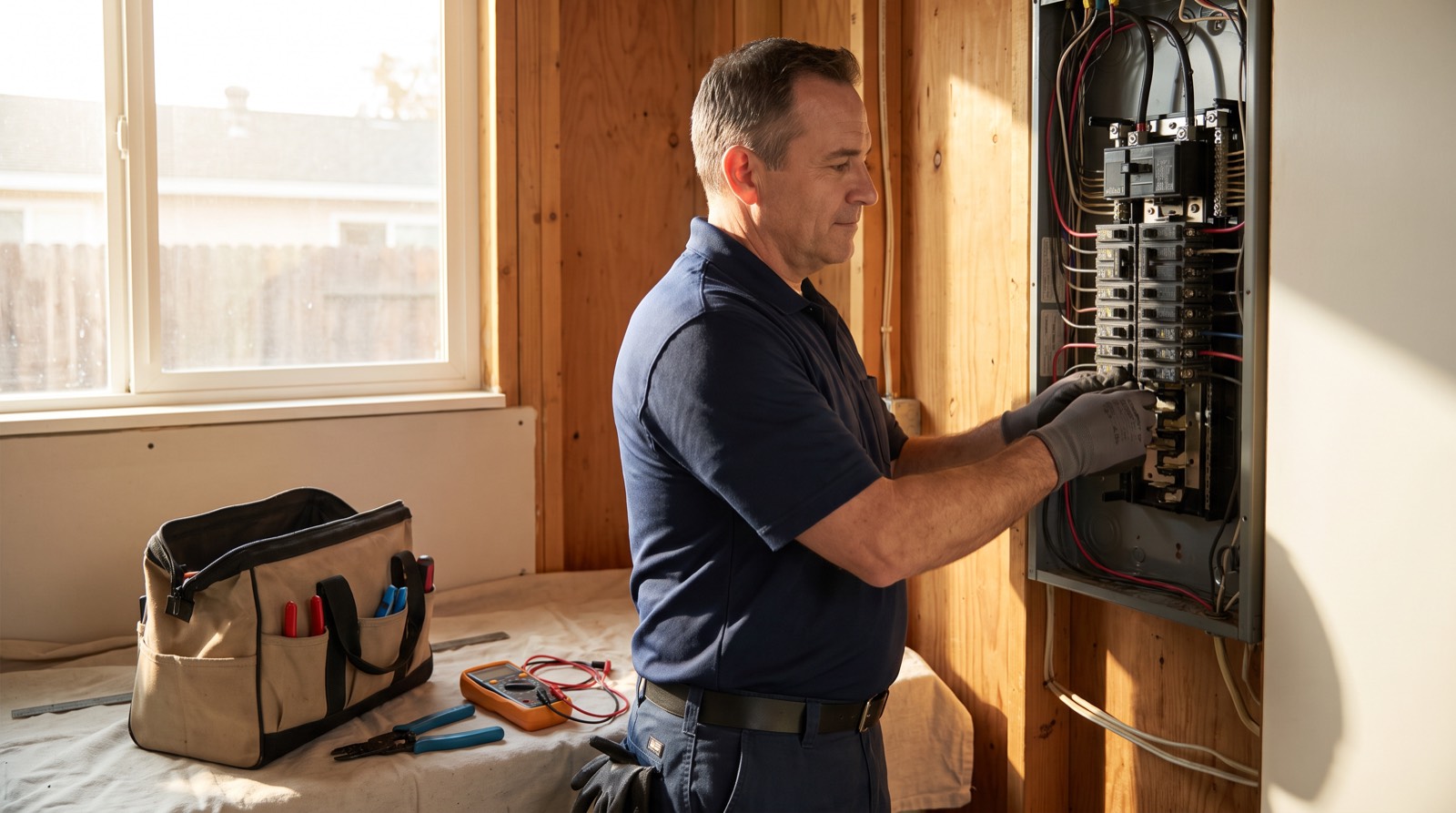
The panel itself is the final consideration in the planning stage of outdoor kitchen wiring. If your main panel is already near capacity, your electrician may recommend a dedicated subpanel near the outdoor kitchen area. A subpanel shortens wire runs, reduces voltage drop, and gives you room to add circuits down the road without touching the main service. The subpanel must be rated for outdoor use or installed inside a weatherproof enclosure if mounted outside. Proper grounding and bonding of the subpanel is critical for safety, since outdoor environments expose the system to moisture and corrosion. Need help planning your outdoor kitchen wiring? Click here for our electrical subpanel installation service.

Wire Sizing And Conduit Selection For Outdoor Kitchen Wiring
Wire sizing is one of the most technical parts of outdoor kitchen wiring, and getting it wrong creates real fire hazards. The wire gauge must match the breaker size and the amperage draw of the circuit it serves. A 20-amp circuit requires 12-gauge copper wire, while a 30-amp circuit needs 10-gauge, and a 40-amp electric grill circuit typically requires 8-gauge copper. Long wire runs from the panel to the outdoor kitchen also require upsizing the wire to compensate for voltage drop, which becomes significant past 75 to 100 feet. Outdoor kitchen wiring almost always involves longer runs than interior work, so voltage drop calculations matter more than people realize. Undersized wire heats up under load, degrades insulation, and eventually fails in dangerous ways.
Conduit selection is just as important as wire sizing for outdoor kitchen wiring. PVC conduit is the most common choice for buried and exposed outdoor runs because it resists corrosion and handles direct burial without issues. Schedule 40 PVC works for most residential outdoor kitchen wiring, while Schedule 80 is required where the conduit might be exposed to physical damage. Liquid-tight flexible conduit is used for the final connections to appliances, since it handles vibration and movement without cracking. All conduit fittings, glue, and connectors must be rated for wet or damp locations to keep moisture out of the wiring system. Proper conduit work is what separates outdoor kitchen wiring that lasts twenty years from work that fails in two.
Burial depth and routing also fall under conduit selection for outdoor kitchen wiring. The National Electrical Code requires PVC conduit carrying branch circuits to be buried at least 18 inches deep, while direct-burial cable without conduit needs 24 inches of cover. Routing should avoid sharp bends, since wire pulling through tight corners damages insulation. Conduit runs should slope slightly so any condensation drains out rather than pooling inside the pipe. Expansion fittings are needed on long exposed runs to handle thermal movement from summer heat. Every detail of conduit work in outdoor kitchen wiring affects long-term reliability, and shortcuts almost always show up as problems later.
Subpanel Placement For Outdoor Kitchen Wiring
Subpanel placement deserves careful thought when planning outdoor kitchen wiring, since location affects both convenience and code compliance. The ideal spot is close to the outdoor kitchen but protected from direct weather exposure, such as inside a garage wall, on a covered patio, or inside a weatherproof enclosure. Code requires a minimum working space of 30 inches wide and 36 inches deep in front of any subpanel, with no obstructions. The subpanel should never be installed inside the cooking area itself, since heat, grease, and smoke degrade electrical components quickly. Mounting height also matters, with the top breaker no higher than 6 feet 7 inches above the working surface. Thoughtful placement makes future service calls faster and keeps your outdoor kitchen wiring accessible.
The feeder cable running from the main panel to the subpanel is a major part of outdoor kitchen wiring, and it must be sized for the full subpanel rating. A 60-amp subpanel typically requires 6-gauge copper or 4-gauge aluminum feeder wire, while a 100-amp subpanel needs 3-gauge copper or 1-gauge aluminum. The feeder must include separate hot, neutral, and ground conductors, with the neutral and ground bars isolated at the subpanel itself. This four-wire feeder setup is required by current code for any subpanel in a separate structure or detached location. Older three-wire feeders are no longer permitted and create dangerous ground fault conditions if used in new outdoor kitchen wiring.
Bonding and grounding the subpanel is the last critical step in outdoor kitchen wiring at the panel stage. The subpanel ground bar connects to the equipment grounding conductor from the main panel, providing a safe path for fault current. If the subpanel serves a detached structure, a supplemental grounding electrode like a ground rod is often required at that structure. The bonding screw or strap that ties neutral to ground at the main panel must be removed or not installed at the subpanel, since bonding in two places creates parallel neutral paths. This detail is one of the most commonly missed items in DIY outdoor kitchen wiring and inspectors catch it every time. Want a code-compliant subpanel for your outdoor kitchen? Click here for our electrical panel installation service.
Weatherproofing And Safety Requirements For Outdoor Kitchen Wiring
Outdoor kitchen wiring lives in an environment that interior wiring never has to handle, with rain, sprinkler overspray, UV exposure, salt air near the coast, and dramatic temperature swings. Every component from outlets to junction boxes to wire connectors must be rated for wet or damp locations as appropriate. The National Electrical Code treats outdoor kitchens as wet locations in most cases, which raises the bar for materials and installation methods. GFCI protection is mandatory on every 120-volt outlet, and AFCI protection is increasingly required as well. Proper weatherproofing also protects your appliances, since moisture intrusion into outdoor kitchen wiring damages expensive equipment over time. The materials cost more, but they are what make outdoor kitchen wiring safe and durable in real-world Central Coast weather.
GFCI Protection For Outdoor Kitchen Wiring
GFCI protection is non-negotiable for outdoor kitchen wiring, and the code requirements have only gotten stricter over the last decade. Every 125-volt and 250-volt receptacle rated 50 amps or less in an outdoor kitchen area must have GFCI protection. This includes outlets for blenders, refrigerators, ice makers, lighting, and even hardwired appliances in many cases. GFCI devices monitor the difference between current flowing out on the hot wire and returning on the neutral, tripping in milliseconds if they detect a leak to ground. That fast response is what prevents fatal shocks when water, wet hands, or damaged cords create a fault. Outdoor kitchen wiring without GFCI protection is illegal and genuinely dangerous, especially around sinks and beverage stations.
GFCI outlets and breakers each have their place in outdoor kitchen wiring depending on the layout. GFCI breakers installed in the panel protect the entire circuit from the breaker to every device downstream, which works well for circuits feeding hard-to-reach outlets. GFCI receptacles installed at the first outlet on a circuit protect that outlet and all downstream devices wired to the load terminals. The choice often comes down to accessibility for resetting, since nobody wants to run to the panel every time a trip happens. Weather-resistant GFCI receptacles marked WR are required for any outlet exposed to the elements, and they must also be installed in weatherproof in-use covers. These details are easy to miss in DIY outdoor kitchen wiring but they show up clearly on a permit inspection.
Testing and maintenance of GFCI devices is part of keeping outdoor kitchen wiring safe long after installation. The test button on each GFCI should be pressed monthly to confirm the device still trips properly under fault conditions. GFCI devices wear out over time, especially in outdoor environments where humidity and temperature swings stress the internal electronics. A GFCI that does not trip when tested needs immediate replacement, since it provides zero protection in a real fault. Some newer GFCI devices include self-test features that automatically check function and indicate failure with an LED. Building these checks into your routine extends the safe life of your outdoor kitchen wiring.

Weatherproof Boxes And Covers For Outdoor Kitchen Wiring
Every electrical box in outdoor kitchen wiring must be rated for the conditions it will face, and that rating shows up in the box markings. Boxes mounted in wet locations like exposed exterior walls need a NEMA 3R or higher rating, while damp locations like covered patios can use less aggressive ratings. Cast aluminum or fiberglass boxes resist corrosion far better than standard steel boxes, especially within a few miles of the coast where salt air accelerates rust. All box entries must be sealed with appropriate fittings, gaskets, or sealant to prevent water intrusion. Drainage holes in the bottom of outdoor boxes let any condensation escape rather than pooling around connections. These small details make a huge difference in the lifespan of outdoor kitchen wiring.
In-use covers, sometimes called bubble covers, are required on outdoor receptacles where a plug remains connected. These covers keep rain off the plug and outlet face even while an appliance is plugged in, which is exactly what happens with outdoor refrigerators and ice makers. Standard flip covers that only close when nothing is plugged in do not meet code for permanently connected outdoor kitchen wiring. The in-use cover must be rated for the depth of the plug and any right-angle adapters being used. Brass or stainless steel hardware on these covers holds up better than zinc-plated steel in outdoor conditions. Quality covers cost a bit more but they protect outdoor kitchen wiring for the long haul.
Junction box placement is another detail that matters in outdoor kitchen wiring. Every splice must happen inside an accessible junction box, and that box has to remain accessible for inspection and future repairs. Buried junction boxes are not permitted under any code, so wire splices below grade are simply not allowed. Boxes hidden inside outdoor kitchen cabinets are acceptable only if the cabinet doors provide reasonable access without dismantling the structure. Marking junction box locations on a wiring diagram during installation saves enormous time on any future service call. Good documentation is part of professional outdoor kitchen wiring even though it never shows in the finished space.
Grounding And Bonding For Outdoor Kitchen Wiring
Grounding is the safety backbone of outdoor kitchen wiring, providing a low-resistance path for fault current to return to the source and trip the breaker. Every metal component in an outdoor kitchen that could become energized must be bonded to the grounding system, including appliance frames, metal cabinets, sinks, and structural steel. The equipment grounding conductor in each branch circuit ties these metal parts back to the panel ground bus and ultimately to the grounding electrode system. Without proper grounding, a fault inside an appliance could energize the entire metal countertop, creating a lethal shock hazard. Outdoor kitchen wiring grounding requirements are stricter than interior work because of the increased contact with moisture and ground itself.
Bonding metal water lines and gas lines in the outdoor kitchen area is also part of complete outdoor kitchen wiring. Any metallic piping system that could become energized must be bonded to the electrical grounding system using an approved bonding jumper. This includes the cold water supply to an outdoor sink, the gas line to a built-in grill or side burner, and any structural metal framing. The bonding jumper has to be sized based on the largest circuit serving the area, typically 6-gauge or 8-gauge copper for residential outdoor kitchens. Bonding clamps must be listed for direct burial or wet-location use where they contact piping. Skipping bonding is one of the most dangerous shortcuts possible in outdoor kitchen wiring.
Supplemental grounding electrodes may be required for outdoor kitchen wiring served by a subpanel in a detached structure. A ground rod driven 8 feet into the earth and connected to the subpanel ground bus provides the supplemental electrode in most cases. Two ground rods spaced at least 6 feet apart are required if the resistance to earth of a single rod exceeds 25 ohms. The grounding electrode conductor connecting the rod to the panel must be at least 6-gauge copper and protected from physical damage. All grounding connections at rods and panels must use listed connectors rated for direct burial. Need expert grounding work for your outdoor kitchen? Click here for our electrical grounding service.
Why You Need A Licensed Electrician For Outdoor Kitchen Wiring
Outdoor kitchen wiring is one of the higher-risk electrical projects a homeowner can take on, combining heavy appliance loads with constant moisture exposure. The cost of doing it wrong shows up as failed inspections, damaged appliances, voided insurance claims, and in the worst cases, fires or shocks. A licensed electrician brings code knowledge, proper tools, and the experience to spot problems that homeowners and general contractors miss. Permits and inspections are required for outdoor kitchen wiring in San Luis Obispo County, and only a licensed contractor can legally pull those permits in most cases. Hiring the right electrician from the start protects your investment, your family, and your home for the entire life of the outdoor kitchen.
Code Compliance For Outdoor Kitchen Wiring
Code compliance is the foundation of safe and legal outdoor kitchen wiring, and the requirements change every three years with each new edition of the National Electrical Code. California amendments add another layer on top of the national code, with specific requirements for seismic bracing, energy efficiency, and wildfire-resistant materials in certain zones. Local building departments in Atascadero, Paso Robles, and San Luis Obispo enforce these codes through permit reviews and field inspections. A licensed electrician stays current on every code change and knows how to apply them to real installations. DIY outdoor kitchen wiring almost always fails inspection because homeowners are working from outdated information or general internet advice.
Permit pulling is part of legal outdoor kitchen wiring in California, and unpermitted work creates problems that follow the property for years. Home sales require disclosure of unpermitted electrical work, and buyers often demand corrections before closing or use it to negotiate price reductions. Insurance claims for fires or damage tied to unpermitted electrical work are routinely denied, leaving homeowners on the hook for everything. Permit fees are a small fraction of the total outdoor kitchen budget, and the inspection process actually protects the homeowner by catching mistakes. Licensed electricians handle the entire permit process so homeowners do not have to navigate the paperwork themselves.
Inspections during outdoor kitchen wiring happen at specific milestones, typically a rough-in inspection before any cover-up and a final inspection before the system goes into service. Rough-in inspections check wire sizing, box installation, grounding, bonding, and conduit work before drywall or finish materials hide everything. Final inspections verify GFCI protection, weatherproofing, working covers, and proper labeling at the panel. An experienced electrician schedules these inspections at the right time and knows what inspectors look for in each phase. Passing inspection on the first try keeps the project on schedule and avoids costly rework on outdoor kitchen wiring.

Long-Term Reliability For Outdoor Kitchen Wiring
Long-term reliability is what separates professional outdoor kitchen wiring from quick fixes that look fine on day one. Quality materials, proper installation techniques, and attention to detail add up to a system that runs for decades without issues. Cheap outlets, undersized wire, and improper conduit work fail within a few years, often in ways that are expensive to diagnose and repair. Outdoor kitchens are a major investment, often costing tens of thousands of dollars when you add up appliances, counters, structure, and labor. Protecting that investment with proper outdoor kitchen wiring just makes financial sense over the long run.
Warranty support is another reason to use a licensed electrician for outdoor kitchen wiring. Most appliance manufacturers require professional installation by a licensed electrician to honor their warranties on built-in grills, refrigerators, and other major equipment. DIY installation often voids these warranties, leaving homeowners without coverage when expensive appliances fail. A licensed electrician provides documentation of the installation that satisfies manufacturer requirements and protects your warranty rights. Good Neighbors Electric also backs our outdoor kitchen wiring with a two-year workmanship warranty, giving you peace of mind beyond the manufacturer coverage.
Future expansion is much easier when outdoor kitchen wiring is done right the first time. Properly sized subpanels, accessible junction boxes, and labeled circuits make additions like a pizza oven, outdoor heater, or sound system straightforward to add later. A poorly planned system often has to be partly torn out and rebuilt to accommodate any change, doubling the cost of the addition. Thinking ahead during the initial install adds very little to the upfront cost but saves substantial money down the road. Professional outdoor kitchen wiring includes that forward thinking as part of the standard approach.
Why Choose Good Neighbors Electric For Outdoor Kitchen Wiring
Good Neighbors Electric brings years of Central Coast experience to every outdoor kitchen wiring project, with deep knowledge of local code requirements and inspection standards. We are licensed and insured, recipients of Best of the Central Coast for electrical services, and dedicated to delivering five-star results on every job. Our team treats your property with respect, keeps job sites clean and organized, and waives the dispatch fee when you move forward with the work. Outdoor kitchen wiring is exactly the kind of project where our attention to detail and commitment to quality pays off for homeowners. We handle everything from the initial load calculation through final inspection so you can focus on planning the menu.
Our two-year workmanship warranty on new installations gives homeowners real protection on their outdoor kitchen wiring investment. We stand behind our work because we install it correctly the first time, using quality materials and proper techniques throughout. If something does go wrong within the warranty period, we come back and make it right at no cost to you. That kind of accountability is rare in the electrical trade and it reflects our commitment to long-term customer relationships. We are not interested in one-time jobs; we want to be your electrician for the life of your home.
Service across the Central Coast means we are familiar with the specific conditions that affect outdoor kitchen wiring in our area, from coastal salt air in Cambria and Cayucos to inland heat in Paso Robles and Atascadero. We adjust our material choices and installation methods to match the conditions at each property, which extends the life of the work. Call us at (805) 610-5530 to schedule your outdoor kitchen wiring consultation, or email anthony.orozco@goodneighborselectric.com with project details. Good Neighbors Electric is ready to help you build the outdoor kitchen you have been planning, with wiring that will hold up for years of summer gatherings. We look forward to earning your trust on this project and every project that follows.
