What To Know Before Adding A Hot Tub To Your Backyard
What To Know Before Adding A Hot Tub To Your Backyard
Adding a hot tub to your backyard sounds like a simple weekend project, but the electrical side of the job is where most homeowners run into trouble. A hot tub draws a significant amount of power, and that power has to be delivered through a dedicated circuit that meets strict National Electrical Code requirements. Before you start clearing space on your patio or shopping for the perfect spa model, you need to understand what your home’s electrical system can handle and what upgrades may be required. Most hot tubs require a 240-volt circuit with 50 to 60 amps of dedicated service, which is far more than a standard outlet can provide. Skipping this planning step often leads to tripped breakers, voided warranties, and serious safety hazards. Good Neighbors Electric in Atascadero, CA, has wired countless hot tubs across the Central Coast, and we know exactly what your backyard project will require. Taking the time to plan the electrical work properly protects your investment and keeps your family safe from shock and fire risks.
Hot Tub Electrical Requirements For Your Backyard Installation
Every hot tub installation begins with a thorough review of your existing electrical panel and the load it currently carries. The vast majority of residential hot tubs are hardwired units, meaning they connect directly to your home’s electrical system through a GFCI-protected disconnect box rather than plugging into a standard outlet. The disconnect must be installed within sight of the hot tub but at least five feet away from the water, per code. A licensed electrician will calculate the amperage draw of your specific model, run the correct gauge of copper wiring, and install a properly rated breaker in your panel. Trenching may also be required to bury the conduit safely underground from the panel to the spa location. Getting these details right from the start saves money, prevents code violations, and ensures your hot tub runs reliably for years.
The Right Hot Tub Electrical Panel Capacity For Your Backyard
Your electrical panel is the heart of every hot tub installation, and its capacity determines whether you can safely add a spa to your backyard. Older homes in Atascadero, Paso Robles, and Templeton often have 100-amp panels that are already near full capacity with existing appliances, HVAC systems, and lighting circuits. Adding a hot tub that pulls 50 amps to an already loaded panel can cause frequent breaker trips, overheating, and even electrical fires. An experienced electrician will perform a load calculation to determine if your current panel has room for the new circuit. If not, an electrical panel upgrade may be necessary before any hot tub wiring can begin.
A 200-amp service panel is the modern standard for homes with hot tubs, EV chargers, and other high-demand appliances. Upgrading to 200 amps gives you the headroom needed for future additions like a pool heater, backup generator, or workshop wiring. The cost of the upgrade pays for itself in the long run by preventing nuisance trips and giving your home a more flexible electrical foundation. During the upgrade, we also inspect your grounding system, service entrance cables, and meter base to confirm everything meets current code. This kind of thorough work is the difference between a quick fix and a long-term solution.
Panel upgrades require coordination with PG&E and a permit from the local building department. Good Neighbors Electric handles all of that paperwork so you don’t have to deal with utility scheduling or inspection appointments. We pull the permit, schedule the inspection, and coordinate any required power shutoffs with your utility provider. Our team works clean and fast, often completing a full panel replacement in a single day. When the job is done, you have a panel that can safely power your new hot tub and anything else you decide to add down the road.
The Dedicated Hot Tub Circuit Requirements For Your Backyard Spa
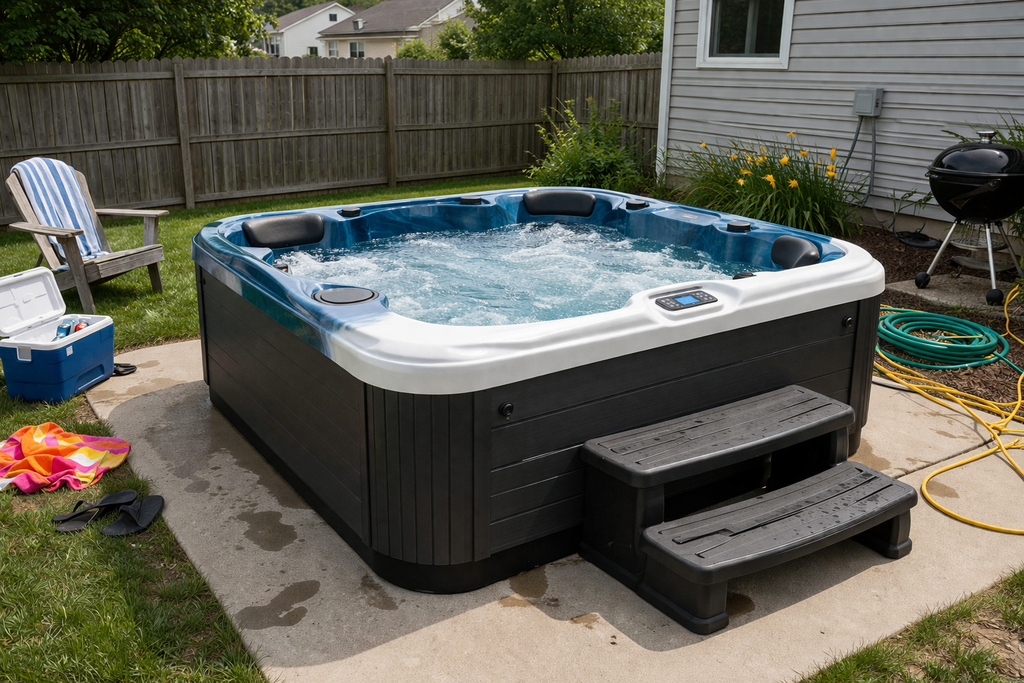
Every hardwired hot tub needs its own dedicated 240-volt circuit, separate from any other appliance or outlet in your home. This means no sharing the circuit with the pool pump, the garage refrigerator, or the patio lighting. The circuit must be protected by a GFCI breaker, which detects ground faults and shuts off power within milliseconds to prevent electric shock. GFCI protection is non-negotiable around water, and your local inspector will verify it before signing off on the job. The breaker size, typically 50 or 60 amps, must match the manufacturer’s specifications listed on the hot tub’s data plate.
Wire sizing is just as important as the breaker rating, and using undersized wire is one of the most common mistakes we see on DIY installations. A 50-amp circuit typically requires 6-gauge copper conductors, while a 60-amp circuit needs even heavier 4-gauge wire for longer runs. The wire must be rated for wet locations and installed inside conduit that protects it from sun, soil, and physical damage. We use copper conductors exclusively for hot tub circuits, since aluminum is more prone to corrosion and loose connections over time. Every termination is torqued to the manufacturer’s specification to prevent the heat buildup that causes melted connections.
The disconnect box, sometimes called a spa panel, is where the circuit terminates before the final whip connects to the hot tub itself. This box must be readily accessible, mounted at a code-compliant height, and located between five and fifteen feet from the water’s edge. It gives you a way to safely cut power to the spa for service, maintenance, or emergencies without going back to the main panel. Need professional hot tub wiring for your backyard project? Click here to learn more about our dedicated spa circuit installations.
The Hot Tub Trenching And Conduit Standards For Your Backyard
Running power from your panel to the hot tub location almost always requires some kind of underground conduit, especially if the spa sits far from the house. Trenching is the process of digging a channel deep enough to protect the conduit from accidental damage by shovels, landscaping equipment, or future construction. The National Electrical Code requires a minimum burial depth of 18 inches for PVC conduit carrying residential branch circuits, though local codes in San Luis Obispo County sometimes require deeper trenches. The trench must also be free of sharp rocks and debris that could damage the conduit over time. Proper bedding and backfill protect the conduit and keep the circuit reliable for decades.
PVC conduit is the most common choice for hot tub circuits because it resists corrosion, handles moisture well, and is easy to work with. We use schedule 40 PVC for most residential runs, and schedule 80 in areas where the conduit might be exposed to physical damage above ground. All connections are glued with proper solvent cement to create a watertight seal, and expansion fittings are added on long runs to handle ground movement. Sweep elbows, rather than sharp 90-degree bends, make pulling the wire easier and reduce stress on the conductors. Every detail of the conduit run matters when you want a job that lasts.
Warning tape is buried about six inches above the conduit to alert future diggers that an electrical line is below. This simple step has saved many homeowners from the expense and danger of accidentally cutting through a live circuit. Once the wire is pulled, the trench is backfilled in layers and compacted to prevent settling. We also document the exact path of the conduit so you and any future contractors know where the line runs. Good Neighbors Electric handles every step of the trenching service in-house, from the first shovel of dirt to the final inspection.
Hot Tub Safety And Code Compliance For Your Backyard Installation
Hot tubs combine two things that don’t naturally mix well, water and electricity, which is why the code requirements around them are some of the strictest in the residential electrical world. Every connection, every clearance, and every protective device exists because someone, somewhere, was hurt or killed by a shortcut. GFCI protection, proper bonding, and adequate clearances from overhead wires are all required by the National Electrical Code and enforced by your local building inspector. Skipping the permit process might save a few dollars upfront, but it creates real risks for you, your family, and any future buyers of your home. A permitted, inspected installation gives you documented proof that the work was done right. It also keeps your homeowner’s insurance valid in the event of a claim.
The Hot Tub GFCI Protection Standards For Your Backyard Safety
Ground fault circuit interrupters are the single most important safety device on any hot tub circuit, and code requires them on every spa installation. A GFCI monitors the current flowing through the hot and neutral conductors, and trips the breaker the instant it detects an imbalance as small as five milliamps. That tiny imbalance signals that current is leaking somewhere it shouldn’t, often through a person who has become part of the circuit. Without GFCI protection, that current keeps flowing, and the results can be fatal in seconds. The GFCI breaker must be located in the spa panel or main panel, and it must be tested monthly to confirm it still functions correctly.
GFCI breakers for hot tub circuits are specialized two-pole devices rated for the full 240-volt load. They cost more than standard breakers, but they are the only thing standing between a wiring fault and a tragedy. We install only high-quality GFCI breakers from trusted manufacturers like Square D, Eaton, and Siemens, and we verify their operation before leaving the job site. If a GFCI trips repeatedly, that’s a warning sign that something is wrong with the hot tub or its wiring, not a reason to bypass the device. We troubleshoot every nuisance trip until we find the root cause and fix it properly.
Testing your GFCI is something every hot tub owner should know how to do. The test button on the breaker simulates a fault and should trip the device immediately when pressed. If the breaker doesn’t trip during the test, it needs to be replaced right away. We show every customer how to perform this simple monthly check during our final walkthrough. Looking for reliable GFCI outlet installation or breaker upgrades? Click here for more information on our ground fault protection services.

The Hot Tub Bonding And Grounding Requirements For Your Backyard
Bonding is the process of electrically connecting all metal parts around a hot tub so they all sit at the same electrical potential. This includes the metal frame of the spa, any metal piping, the pump motor, nearby metal handrails, and even rebar in the concrete pad if present. The bonding conductor is a solid copper wire, typically 8-gauge, that ties everything together and connects to the spa’s bonding lug. The goal is to eliminate any voltage difference between metal objects a person might touch while in the water. Without proper bonding, even a small electrical fault could create a dangerous voltage gradient across the spa area.
Grounding is related to bonding but serves a different purpose, providing a safe path back to the panel for fault current. The equipment grounding conductor runs alongside the circuit conductors inside the conduit, and it connects the hot tub frame to the grounding bus in your electrical panel. When a fault occurs, this conductor carries the fault current safely back to ground, which trips the breaker and shuts off power. Grounding and bonding work together as a system, and one cannot replace the other. Inspectors check both carefully because failures here can be deadly.
We pay close attention to bonding and grounding on every hot tub installation, since these are the most commonly overlooked details on amateur jobs. Every metal component within five feet of the spa gets bonded, and every connection is made with code-approved lugs and connectors. We also verify the integrity of your home’s main grounding electrode system before energizing the new circuit. If your ground rod or water pipe bond is damaged or missing, we repair it as part of the job. Need professional electrical grounding work? Click here to learn more about our grounding and bonding services.
The Hot Tub Permit And Inspection Process For Your Backyard Project
Every hot tub electrical installation in San Luis Obispo County requires a permit from the local building department before any work begins. The permit ensures that a qualified inspector will review the completed installation and verify it meets all current code requirements. Skipping the permit might seem like a way to save time and money, but it creates serious problems down the road. Unpermitted electrical work can void your homeowner’s insurance, complicate the sale of your home, and force expensive corrections later. A permitted job protects your investment and gives you documented proof that the work was done correctly.
The inspection itself is a straightforward process when the work has been done by a licensed electrician. The inspector checks the panel for proper breaker installation, verifies the wire sizing and conduit routing, confirms GFCI protection, and examines all bonding and grounding connections. They also check the disconnect location, the trench depth, and the final connections at the hot tub itself. A clean, organized installation passes inspection quickly, while sloppy work often requires multiple visits and costly corrections. We schedule the inspection, meet the inspector on site, and handle any questions or follow-up items.
Good Neighbors Electric pulls the permit, completes the work to code, and walks the inspector through the finished job. You never have to deal with the paperwork or coordinate the schedule yourself. We’ve built strong relationships with the local inspectors over the years, and they trust our work because we get the details right every time. When the inspection is signed off, you receive copies of all the documentation for your records. That paperwork stays valuable for as long as you own the home.
Why You Need Professional Hot Tub Wiring From Good Neighbors Electric
Hot tub wiring is not a DIY project, no matter how handy you are or how many YouTube videos you’ve watched. The combination of high voltage, high amperage, and constant water exposure creates real risks that only a trained electrician knows how to manage. Hiring a professional protects your family, your home, and your investment in the spa itself. It also keeps your manufacturer’s warranty intact, since most hot tub brands require professional installation as a condition of coverage. Good Neighbors Electric brings decades of combined experience to every backyard spa project we take on. We treat your home like our own and leave every job site cleaner than we found it.
The Licensed Electrician Advantage For Your Hot Tub Backyard Project
A licensed electrician brings training, experience, and accountability to your hot tub installation that no handyman or DIYer can match. California requires electrical contractors to hold a C-10 license, which involves years of apprenticeship, classroom hours, and a rigorous state exam. That license means the contractor has proven their knowledge of the National Electrical Code, safety practices, and current installation standards. It also means they carry liability insurance and workers’ compensation coverage to protect you in case anything goes wrong. Hiring unlicensed help to save a few dollars exposes you to serious financial and legal risk.
Our team stays current on code changes, manufacturer requirements, and new product technology through ongoing training and continuing education. The 2023 National Electrical Code introduced several updates affecting hot tub and spa installations, and we know exactly how they apply to your project. We also work directly with major hot tub brands to ensure our installations meet their specific requirements. That attention to detail protects your warranty and gives you confidence in the finished job. Every project we complete reflects the standards that earned us recognition as Best of the Central Coast for electrical services.
Licensed work also matters when it comes time to sell your home. Buyers and their inspectors look closely at recent electrical additions, and unpermitted work raises immediate red flags. A professionally installed, permitted hot tub circuit adds value to your home rather than creating problems at closing. We provide complete documentation for every job, including permit numbers, inspection sign-offs, and any warranty paperwork. That record gives you peace of mind today and protects your investment for years to come.

The Workmanship Warranty Difference For Your Hot Tub Backyard Installation
Good Neighbors Electric backs every new installation with a two-year workmanship warranty, which is twice the industry standard. That warranty means if anything we installed fails because of how we did the work, we come back and fix it at no charge. We stand behind our work because we install it right the first time, using quality materials and proven techniques. Our customers across Atascadero, Paso Robles, San Luis Obispo, and the rest of the Central Coast count on that warranty when they choose us. It’s part of what sets us apart from competitors who disappear after the check clears.
Beyond the formal warranty, we build long-term relationships with our customers based on honest work and clear communication. We explain what we’re doing and why, answer your questions in plain language, and never push services you don’t need. When you call us back for future projects, we already know your home and your electrical system. That continuity saves you time and money on every follow-up job. Many of our customers have been with us for years, and we treat each one like a neighbor.
Our waived dispatch fee when you move forward with the work is another way we show respect for your time and budget. You won’t pay just to have us come out and look at the job. We provide clear, written estimates before any work begins, so there are no surprises when the invoice arrives. Quality work at a fair price is the foundation of every Good Neighbors Electric project. We’ve built our reputation one satisfied customer at a time.
Why Choose Good Neighbors Electric For Your Hot Tub Backyard Wiring
Good Neighbors Electric has served the Central Coast from our Atascadero headquarters for years, building a reputation for quality, honesty, and respect for our customers’ homes. We are licensed, insured, and dedicated to delivering five-star service on every job, whether it’s a single outlet or a full hot tub installation. Our team arrives in clean uniforms, drives clearly marked trucks, and treats your property with the care it deserves. We lay down drop cloths, wear shoe covers, and clean up thoroughly before we leave. Those small touches reflect the bigger commitment we make to every customer.
Our service area covers Atascadero, Paso Robles, Templeton, Santa Margarita, San Luis Obispo, Morro Bay, Cambria, Cayucos, Los Osos, Pismo Beach, Arroyo Grande, Grover Beach, Oceano, Avila Beach, Creston, Shandon, and San Miguel. No matter where your backyard hot tub project is located, we can get there quickly and handle the job from start to finish. We offer free quotes, transparent pricing, and the waived dispatch fee that proves we value your business. Our two-year workmanship warranty gives you the peace of mind that comes with hiring true professionals. Every customer gets the same level of attention, no matter the size of the project.
Ready to add a hot tub to your backyard? Call Good Neighbors Electric at (805) 610-5530 or email anthony.orozco@goodneighborselectric.com to schedule your free quote today. We’ll inspect your panel, review your spa specifications, and give you a clear plan for getting your new hot tub wired safely and correctly. With our experience, our warranty, and our commitment to clean, professional work, you can trust us to handle every detail. Good Neighbors Electric is the team your neighbors recommend, and we’d be proud to add you to that list.