Signs Your Home Needs An Electrical Subpanel
Your home runs on a single main electrical panel that takes power from the utility and divides it across every circuit inside your walls. When that panel reaches its limit, you start to see warning signs that the system is stretched thinner than it should be. A subpanel solves this problem by acting as a smaller satellite panel that branches off the main service and feeds a specific area, like a garage, a workshop, a pool deck, or a backyard guest unit. Summer in Atascadero brings heavier loads from air conditioning, pool pumps, and outdoor entertaining, so this is the season when an undersized panel often reveals its weakness. Many homeowners assume tripping breakers and flickering lights are just quirks they have to live with, but those symptoms usually point to a real capacity issue. Recognizing the signs early gives you time to plan a proper solution instead of reacting to an emergency. The goal of this guide is to help you spot the indicators that your home needs a subpanel so you can keep your power safe, balanced, and ready for the demands of modern living.
Common Warning Signs Your Home Needs An Electrical Subpanel
The clearest signals that your home needs an electrical subpanel show up in everyday use, often when you least expect them. Breakers that trip during routine tasks, outlets that feel warm, and a main panel with no open slots all point toward a system running out of room. These symptoms tend to grow worse as you add appliances, upgrade your HVAC system, or expand your living space. A subpanel relieves the main panel by giving new circuits their own dedicated home, which spreads the load and reduces strain. Below are the most common warning signs grouped by category so you can match what you are seeing in your own home to a likely cause. Paying attention to these details now can save you from a costly failure later.
Frequent Breaker Trips Are A Top Sign Your Home Needs An Electrical Subpanel
A breaker exists to protect your wiring by cutting power when a circuit draws more current than it can safely handle. When a single breaker trips once in a great while, that is normal protection doing its job after an unusual surge or a faulty appliance. The problem starts when the same breaker trips again and again during ordinary activity, such as running a microwave and a toaster at the same time. Repeated trips mean that circuit is overloaded, and overloaded circuits are one of the strongest signs your home needs an electrical subpanel. Each trip is the system telling you it has reached its safe limit and cannot deliver more without risk. Ignoring the pattern only forces you to keep resetting the breaker, which does nothing to fix the underlying capacity shortage. Over time, that constant cycling can wear out the breaker itself and create a fire hazard inside the panel.
The location of the trips often tells you exactly where the demand is concentrated in your home. Kitchens, laundry rooms, garages, and home offices tend to overload first because they hold the heaviest appliances and the most plugged in devices. If your garage breaker trips every time you run a power tool while the freezer is cycling, that area is starving for its own dedicated supply. A subpanel installed near that space lets you add several new circuits without touching the already crowded main panel. This approach divides the work so no single circuit carries more than it was designed to support. The result is steady power that does not collapse the moment you turn on a second high draw device. You gain reliability and you remove the daily frustration of resetting switches in a dark utility closet.
Many homeowners try to solve frequent trips by swapping a smaller breaker for a larger one, and that shortcut is genuinely dangerous. The breaker is sized to match the wire behind it, so installing a higher rated breaker on undersized wiring removes the very protection that prevents overheating. This mistake can allow a circuit to draw far more current than the wire can carry, which heats the insulation until it melts or ignites. A licensed electrician will never bypass safety this way; instead, the correct fix is to add capacity through a subpanel or a service upgrade. If your home suffers from constant breaker trips, schedule a professional evaluation before the situation grows worse. Need a dedicated panel for a high demand area? Click here for our electrical subpanel installation service. A trained eye can confirm exactly what your system needs and size the solution correctly.
A Full Main Panel Is A Clear Sign Your Home Needs An Electrical Subpanel
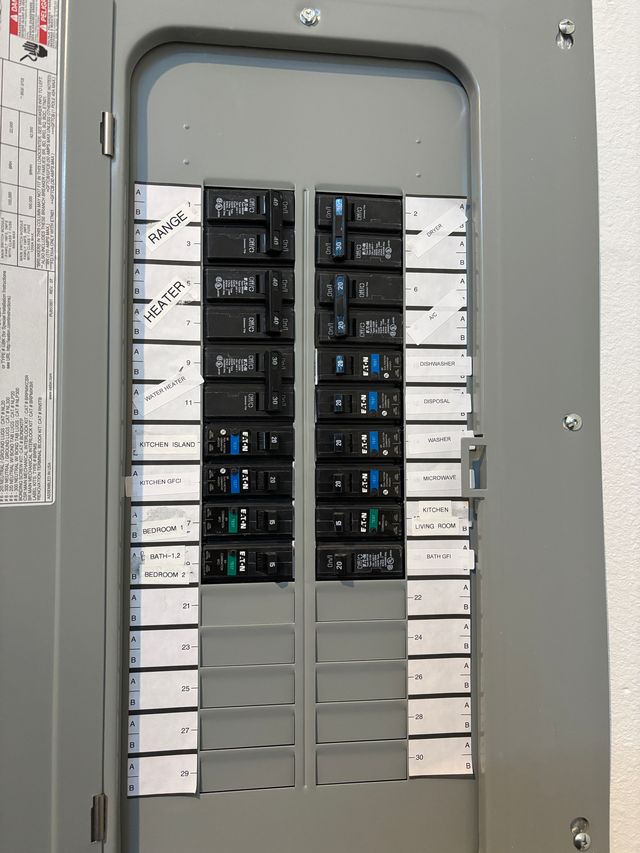
Every main electrical panel has a fixed number of slots where breakers can be installed, and once those slots fill up, you have no room to add new circuits. This becomes a real obstacle when you want to wire a new addition, power a workshop, or set up a dedicated line for a hot tub. A main panel packed wall to wall with breakers is a clear sign your home needs an electrical subpanel to expand your circuit capacity. Some panels appear full but actually hold tandem breakers that cram two circuits into one slot, which adds even more load to an already busy bus bar. When the bus bar that distributes power runs near its rated amperage, pushing more current through it creates heat and accelerates wear. A subpanel pulls a single feeder circuit from the main panel and then redistributes that power across its own set of slots. This gives you the room you need without forcing a full and expensive replacement of the main service.
A subpanel is especially useful when the new load you want to add sits far from the main panel. Running many individual circuits across a long distance back to a crowded main panel wastes wire, raises material cost, and complicates the installation. Instead, an electrician can run one larger feeder out to a subpanel near the area you are powering, then branch the smaller circuits locally. This keeps wire runs short, lowers voltage drop, and makes future changes simpler because everything for that zone lives in one place. Detached garages, backyard offices, and pool equipment pads all benefit from this layout because they concentrate demand in a remote spot. A local subpanel turns that distant corner of your property into a fully supported electrical area. You end up with a cleaner system that is easier to understand and easier to service.
It is worth knowing the difference between adding a subpanel and upgrading your entire service. A subpanel works when your main panel still has enough overall amperage but simply lacks open slots to add circuits. If your whole home is drawing close to its total service rating, you may need a larger main panel before a subpanel makes sense. An electrician calculates your total load to determine which path fits your situation, because guessing here leads to overloaded service. Thinking about more power for your whole home? Click here for our electrical service upgrade service. Getting this assessment right protects your investment and keeps your home within code. The correct choice depends on real numbers, not assumptions, so professional measurement matters.
Warm Panels And Flickering Lights Signal Your Home Needs An Electrical Subpanel
A healthy electrical panel should feel cool and quiet during normal operation, with no buzzing, no heat, and no burning smell. When you place a hand near the panel cover and feel warmth, that is a serious indicator that the system is working harder than it should. Heat builds up when connections loosen, when breakers carry too much current, or when the bus bar struggles to keep up with demand. These conditions often appear together with an overloaded panel that has no spare capacity, which makes warmth a strong sign your home needs an electrical subpanel. A subpanel reduces the heat in the main panel by moving part of the load onto separate circuits and a separate bus. Spreading the demand lowers the current flowing through any single point, which keeps temperatures in a safe range. You should never ignore a warm panel, because heat inside an enclosure is one of the leading causes of electrical fires.
Flickering or dimming lights tell a similar story about a system under strain. When you switch on a large appliance and the lights across the room dip, the circuit cannot supply enough current to satisfy every device at once. This voltage sag happens when too many loads share the same overworked circuit or when the panel is near its capacity limit. Occasional dimming from a heavy motor like an air conditioner compressor can be normal, but constant flickering during ordinary use is not. Adding a subpanel lets you place demanding equipment on its own dedicated circuits so it stops borrowing capacity from your lights. The lighting then stays steady because it no longer competes with major appliances on a single overloaded path. Stable, consistent light is one of the quiet benefits of properly distributed electrical load.
Other warning sounds and smells deserve immediate attention because they point to active problems inside the panel. A faint buzzing or crackling noise often comes from a loose connection or a breaker that is arcing under load. A sharp odor like hot plastic means insulation may already be overheating, and that calls for the power to be shut off and a professional brought in right away. These symptoms can accompany an overloaded panel, and while a subpanel improves capacity, damaged components must also be inspected and repaired. An electrician will open the panel, check terminations, test breakers, and confirm the bus bar is sound before adding new equipment. Worried something in your panel is already damaged? Click here for our electrical subpanel repair service. Catching these issues early keeps a small repair from turning into a major emergency.
Home Upgrades That Show Your Home Needs An Electrical Subpanel
Beyond warning signs, certain home projects naturally create the need for a subpanel because they add significant new load to your system. Pools, spas, electric vehicle chargers, workshops, and home additions all demand dedicated power that an already busy main panel often cannot provide. When you plan one of these upgrades, a subpanel gives the new equipment a clean and code compliant source of electricity. This section walks through the projects most likely to push your home past its current capacity. Recognizing these triggers helps you budget for the right electrical work from the start rather than discovering the shortfall halfway through. Planning ahead turns a potential headache into a smooth installation.
Pool And Spa Equipment Often Shows Your Home Needs An Electrical Subpanel
Pool pumps, spa heaters, and hot tub equipment draw heavy and continuous current that strains a typical residential panel. These systems often need dedicated circuits with specific overcurrent protection and ground fault protection to meet electrical code in California. Because pool equipment usually sits some distance from the house, running each circuit back to a crowded main panel becomes impractical and expensive. A subpanel installed near the pool equipment pad concentrates all the pool circuits in one convenient location. This arrangement supports the pump, the heater, the lighting, and any automation controls without overwhelming your main service. Summer demand makes this especially relevant, since pool season puts these systems under their heaviest use right when air conditioning is also running hard. A dedicated subpanel keeps the whole setup safe, organized, and easy to maintain.
Safety codes around water and electricity are strict for good reason, and a subpanel helps you meet them cleanly. Pool circuits require ground fault circuit interrupter protection to guard against shock in wet environments, along with proper bonding and grounding of all metal parts. A local subpanel makes it straightforward to install these protective devices and to label every circuit clearly. It also keeps the wiring organized so future service calls go faster and cost less. When a professional sizes the subpanel, they calculate the combined load of every pool component to ensure the feeder and breakers can handle continuous operation. This careful planning prevents nuisance trips during a hot afternoon when the pump and heater run together. The end result is a pool area that performs reliably and protects your family.
Adding pool equipment to a system that is already near capacity without a subpanel invites trouble down the line. You may find that the pump trips the main breaker, that the heater struggles to maintain temperature, or that other parts of the home lose power when the pool runs. A subpanel removes this conflict by isolating the pool load on its own branch of the system. It also future proofs the area for additions like a spa, water features, or upgraded lighting. An electrician familiar with pool wiring will know the exact code requirements for your jurisdiction and inspection process. Putting this infrastructure in place correctly the first time saves you from rework and failed inspections. A well planned pool subpanel pays for itself in reliability and peace of mind.

EV Chargers And Workshops Reveal Your Home Needs An Electrical Subpanel
Electric vehicle chargers are one of the fastest growing reasons homeowners discover their home needs an electrical subpanel. A Level 2 charger draws a large continuous load, and adding it to a panel that is already full can overload your service almost immediately. A subpanel in the garage gives the charger its own dedicated circuit while leaving room for future garage upgrades. This keeps your vehicle charging at full speed overnight without competing against the dryer, the water heater, or the air conditioner. Because the charger runs for hours at a stretch, the circuit must be sized for continuous duty according to code. A properly installed subpanel handles that demand cleanly and leaves your main panel free for the rest of the house. Many homeowners also add a second charger later, and a subpanel makes that expansion simple.
Garage and home workshops create a similar demand profile because they combine many high draw tools in one space. Table saws, dust collectors, welders, air compressors, and battery chargers all pull serious current, often at the same time. A single garage circuit cannot support this kind of work, which is why a subpanel is the standard solution for serious hobbyists and tradespeople. The subpanel lets you build out several dedicated circuits, each sized for the tool it serves, so nothing trips when you run two machines together. It also lets you add good lighting and convenient outlets without borrowing capacity from the tools. A well powered shop is safer because tools run at their rated performance instead of struggling on an undersized supply. Organized circuits also make it easy to shut off specific equipment for maintenance.
Detached structures like a backyard studio, a guest unit, or a barn almost always benefit from their own subpanel. Running one feeder out to the building and then branching circuits locally is far more efficient than pulling many separate runs from the house. This approach reduces voltage drop over distance, which matters because long wire runs lose energy and can leave equipment underpowered. A local subpanel in the detached space keeps everything tidy and gives that building a clear, independent point of control. It also simplifies future projects, since adding an outlet or a light fixture stays within the structure instead of reaching back to the main panel. An electrician will calculate the feeder size based on the total expected load of the building. Want a dedicated panel for your garage, shop, or detached space? Click here for our electrical subpanel installation service. The right setup turns any outbuilding into a fully functional electrical zone.
Home Additions And Remodels Confirm Your Home Needs An Electrical Subpanel
Building a new room, finishing a basement, or converting a garage into living space adds a substantial block of new circuits to your home. Every new outlet, light, and appliance in the addition draws from your existing service, and a full main panel simply has no room to accommodate them. A subpanel placed near the new construction provides a clean source of power for all the added circuits. This keeps the addition self contained and avoids cramming more breakers into a panel that is already maxed out. It also shortens wire runs because the new circuits connect to a nearby panel instead of crossing the whole house. For larger additions, this local distribution is often the most practical and cost effective way to wire the project. The subpanel becomes the hub for everything in the new space.
Kitchen and bathroom remodels deserve special mention because these rooms carry strict code requirements and heavy electrical loads. Modern kitchens need multiple dedicated circuits for the refrigerator, the dishwasher, the microwave, the range, and the small appliance counters. Bathrooms require ground fault protected circuits and adequate capacity for heaters, fans, and lighting. When a remodel adds all of these at once, the existing panel frequently cannot keep up. A subpanel gives the renovated space the circuits it needs while keeping the work organized and inspection ready. This planning prevents the frustrating discovery, late in a project, that the panel cannot support the new design.
Any major remodel is also the ideal moment to evaluate your overall electrical health, since walls are open and access is easy. An electrician can assess the main panel, calculate the added load, and recommend either a subpanel or a full service upgrade based on real numbers. Doing this work during construction is far cheaper than retrofitting it after the drywall goes up. It also ensures the finished space passes inspection without delays that hold up your project. Planning a remodel or addition? Click here for our electrical inspection service to confirm your system is ready. Building the electrical capacity into the project from the start protects your timeline and your budget. A subpanel installed during a remodel sets your home up for years of reliable service.
Why You Need A Professional To Install Your Electrical Subpanel
A subpanel ties directly into your home’s main electrical service, and that connection carries serious voltage that demands respect and expertise. Proper installation involves load calculations, correct feeder sizing, accurate grounding and bonding, and full compliance with local code. A licensed electrician handles permits and inspections so your work is documented and approved, which protects you when you sell your home. Mistakes in this kind of work are not just inconvenient; they can create shock and fire hazards that put your family at risk. Choosing a qualified professional ensures the job is done right the first time. The sections below explain why expert installation matters and why Good Neighbors Electric is the team to call.
Why You Need Correct Load Calculations For Your Electrical Subpanel
Sizing a subpanel correctly starts with a load calculation that measures the demand of every circuit it will feed. This is not guesswork; it follows defined methods in the National Electrical Code to determine the right feeder and breaker sizes. An undersized feeder will overheat and trip, while an oversized one wastes money and can leave wiring underprotected. A professional weighs continuous loads like EV chargers differently from intermittent loads, because continuous use requires extra capacity. Getting these numbers right is the foundation of a safe and reliable subpanel. This precision is exactly what separates a lasting installation from a recurring problem.
The calculation also confirms that your main panel can spare the capacity the subpanel needs in the first place. If your existing service is already near its limit, adding a subpanel without checking could overload the main panel itself. An electrician evaluates your total connected load against your service rating before recommending the right path forward. Sometimes the answer is a subpanel, and sometimes it is a full service upgrade to a higher amperage. Knowing the difference protects you from paying for a solution that does not actually solve your problem. Honest measurement leads to the right recommendation every time.
Permits and inspections exist to verify that all of this work meets the safety standards your community relies on. A licensed electrician pulls the proper permit, performs the work to code, and arranges for an inspector to confirm the result. This paperwork proves the installation was done correctly, which matters for insurance and for future home sales. Unpermitted electrical work can create liability and may need to be torn out and redone. Choosing a professional means your subpanel is legal, documented, and built to last. That assurance is part of the value a licensed team provides.
Why You Need Proper Grounding And Bonding For Your Electrical Subpanel
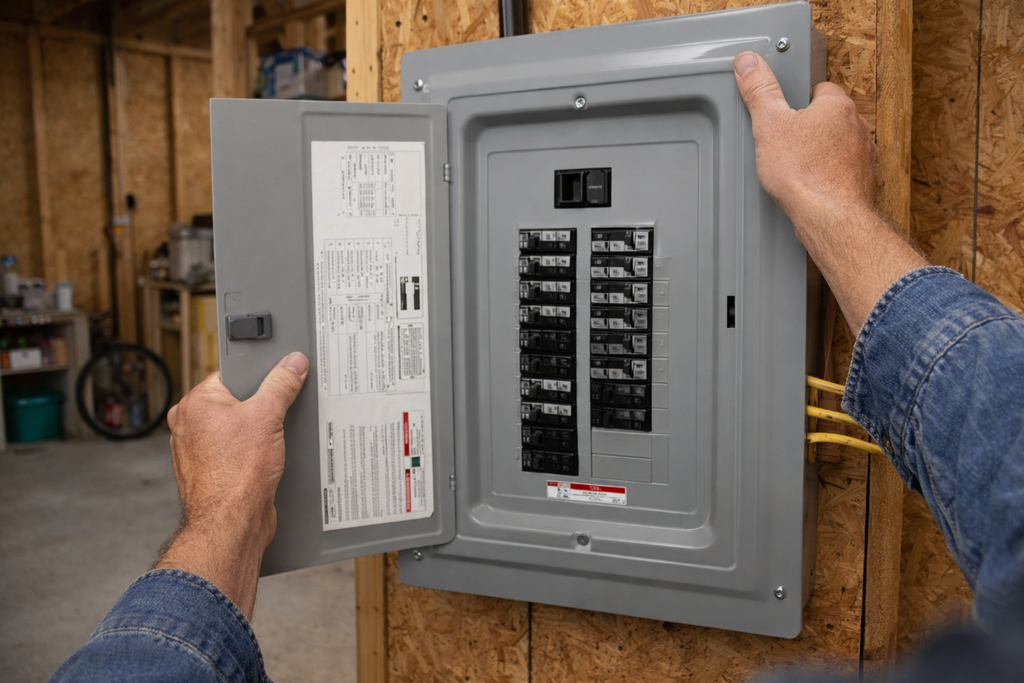
Grounding and bonding are among the most important and most misunderstood parts of a subpanel installation. In a subpanel, the neutral and ground must be kept separate, unlike in the main panel where they are bonded together. Getting this wrong creates dangerous conditions where current can travel on paths it should never use. A licensed electrician knows this rule and wires the subpanel so the system remains safe under fault conditions. This single detail is one of the clearest reasons to avoid do it yourself subpanel work. Proper separation protects both your equipment and the people in your home.
A subpanel also needs its own grounding electrode connection when it serves a detached structure, which adds another layer of code requirements. The electrician installs the correct grounding electrodes and bonds metal parts so any fault current has a safe path back to the source. This protects against shock and helps breakers trip quickly when something goes wrong. Skipping or shortcutting this work leaves the system vulnerable in exactly the situations where protection matters most. Professionals follow these steps carefully because they understand the consequences of getting them wrong. The result is a system that responds correctly when a fault occurs.
Quality terminations and clean workmanship round out a safe installation that lasts for decades. Loose connections are a leading cause of panel heat and arcing, so every wire must be torqued to specification and seated properly. A skilled electrician labels each circuit, organizes the wiring, and leaves the panel neat enough for any future technician to understand. This attention to detail prevents problems and makes service calls faster down the road. Worried your existing subpanel was wired incorrectly? Click here for our electrical subpanel repair service. Careful work today saves you trouble for years to come.
Why You Need Good Neighbors Electric For Your Electrical Subpanel
Good Neighbors Electric brings licensed and insured professionals to every subpanel project, so you can trust that the work meets the highest standards. The team was named a recipient of Best of the Central Coast for electrical services, a recognition earned through consistent quality and care. Every job is sized with proper load calculations, wired to code, and finished with clean and organized work that respects your property. The crew treats your home with care and leaves the job site tidy when the work is done. Serving Atascadero and the surrounding Central Coast communities, the team understands the local code and inspection process. That local knowledge keeps your project moving without surprises.
The company stands behind its work with a two year workmanship warranty on new installations, giving you confidence long after the job is complete. Good Neighbors Electric also waives the dispatch fee when you move forward with the recommended work, which keeps your costs fair and transparent. The team is dedicated to providing five star service on every call, from the first estimate to the final inspection. Honest recommendations mean you only pay for the work your home actually needs. This commitment to ethos guides every decision the company makes. You get a partner who values your trust as much as your business.
Reaching out is simple when you are ready to add a subpanel or evaluate your electrical capacity. You can call Good Neighbors Electric at (805) 610-5530 or email anthony.orozco@goodneighborselectric.com to schedule a visit. The shop is located at 8778 Plata Ln, Atascadero, CA 93422, and the team serves communities across the Central Coast. Ready to expand your home’s electrical capacity the right way? Click here for our electrical subpanel installation service. A skilled electrician will assess your needs, explain your options clearly, and deliver a solution built to last. Good Neighbors Electric is ready to keep your home powered, safe, and prepared for whatever you plug in next.